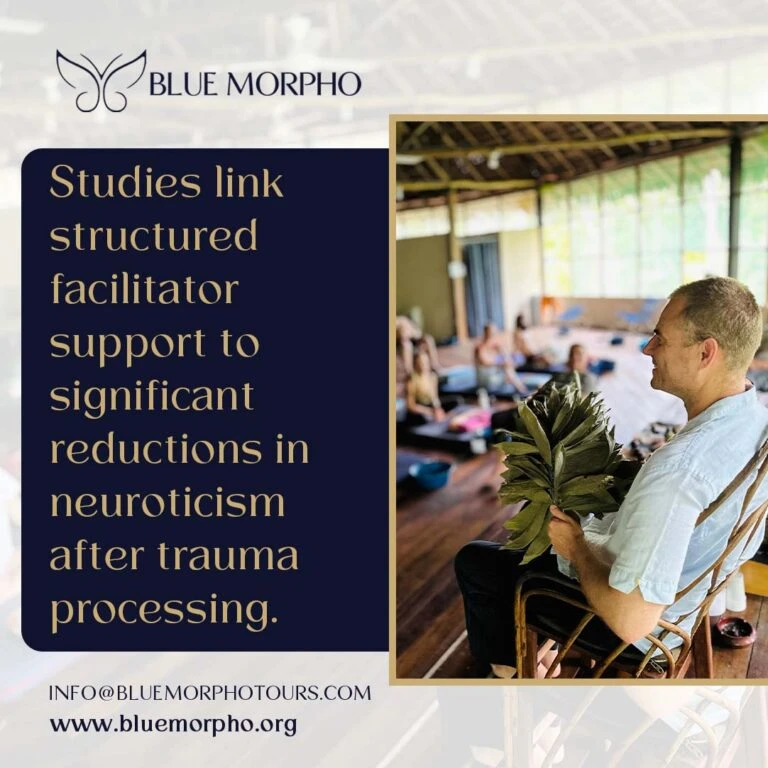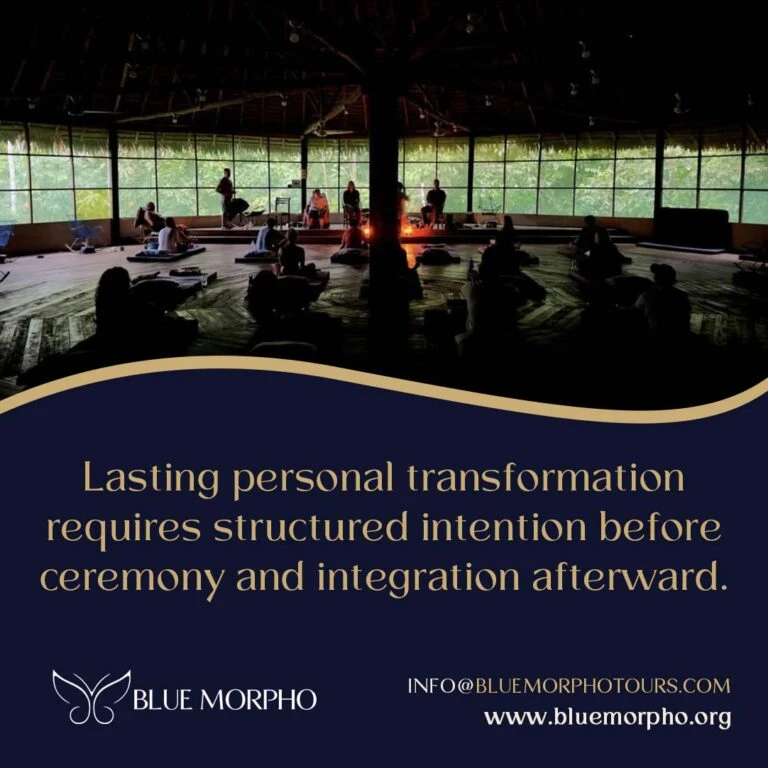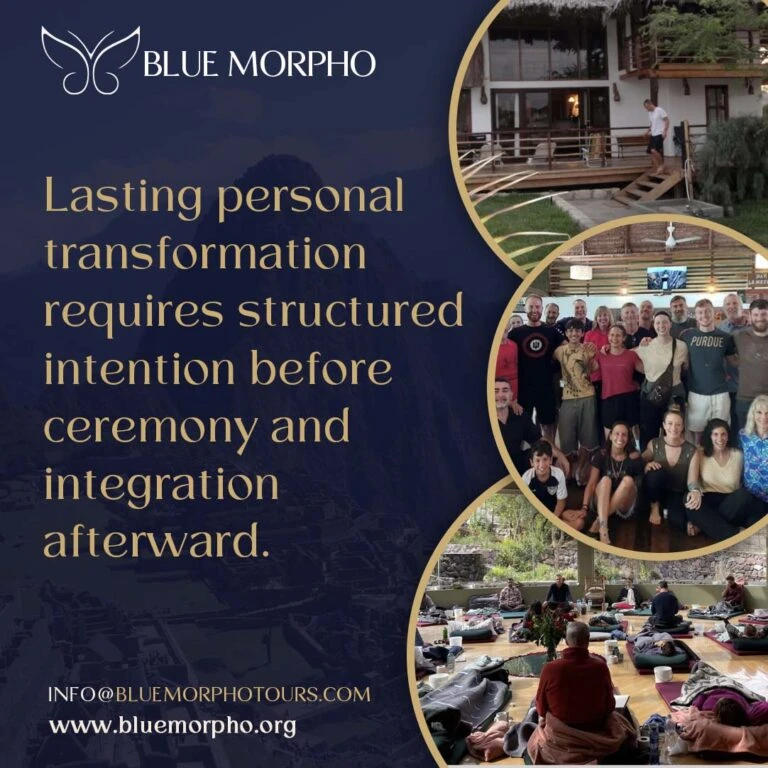
Ayahuasca safety depends heavily on who is running the ceremony. A skilled, trained facilitator can recognize warning signs, manage a crisis calmly, and guide a participant through a difficult experience. An untrained one often cannot. This is why ayahuasca facilitator training has become one of the most important factors people research before booking a retreat.
Key Takeaways:
- A trained facilitator is often the only safety system in an unregulated ceremony space
- Real ayahuasca training covers medical screening, drug interaction risk, and emergency response
- A 2024 peer-reviewed review found ayahuasca has an acceptable safety profile in controlled settings, not uncontrolled ones
- Personal ceremony experience is not the same skill as trained facilitation
- Blue Morpho’s training path grew out of a lineage-based apprenticeship, not a weekend workshop
What Does Ayahuasca Training Actually Cover?
Real plant medicine facilitator training goes far beyond pouring a cup of medicine and playing music. A properly trained facilitator learns to screen participants for medical and psychological risk factors, manage drug interactions, and respond to physical or emotional distress during ceremony.
A 2024 systematic review in the International Journal of Toxicology examined 78 studies on ayahuasca and DMT safety. The researchers found that serious adverse effects are rarely reported in healthy populations, describing an acceptable safety profile for traditional ayahuasca use in controlled settings. The phrase “controlled settings” is doing a lot of work in that sentence. Control comes from training, not luck.
Screening and Emergency Response
Good training programs teach facilitators how to build an intake process that flags contraindicated medications, cardiac conditions, and psychiatric history. They also cover emergency response steps, so a facilitator knows what to do in the first minutes of a crisis rather than improvising.
What Happens When Training Is Missing?
Without training, a facilitator may miss early signs of a dangerous reaction, fail to ask about medications that interact with the brew, or simply not know how to ground someone in acute distress. In an unregulated space, the facilitator’s judgment is often the only safety system in the room. That makes their preparation the difference between a supported difficult experience and a genuinely unsafe one.
Why Does This Matter More During the Psychedelic Renaissance?
Interest in plant medicine has grown quickly during the psychedelic renaissance, and new retreat centers have opened to meet demand. Growth without corresponding standards is a real risk. Psychedelic training programs exist precisely to keep pace with that growth, giving people a way to build skill and judgment before they hold space for others.
How Blue Morpho Approaches Facilitator Training
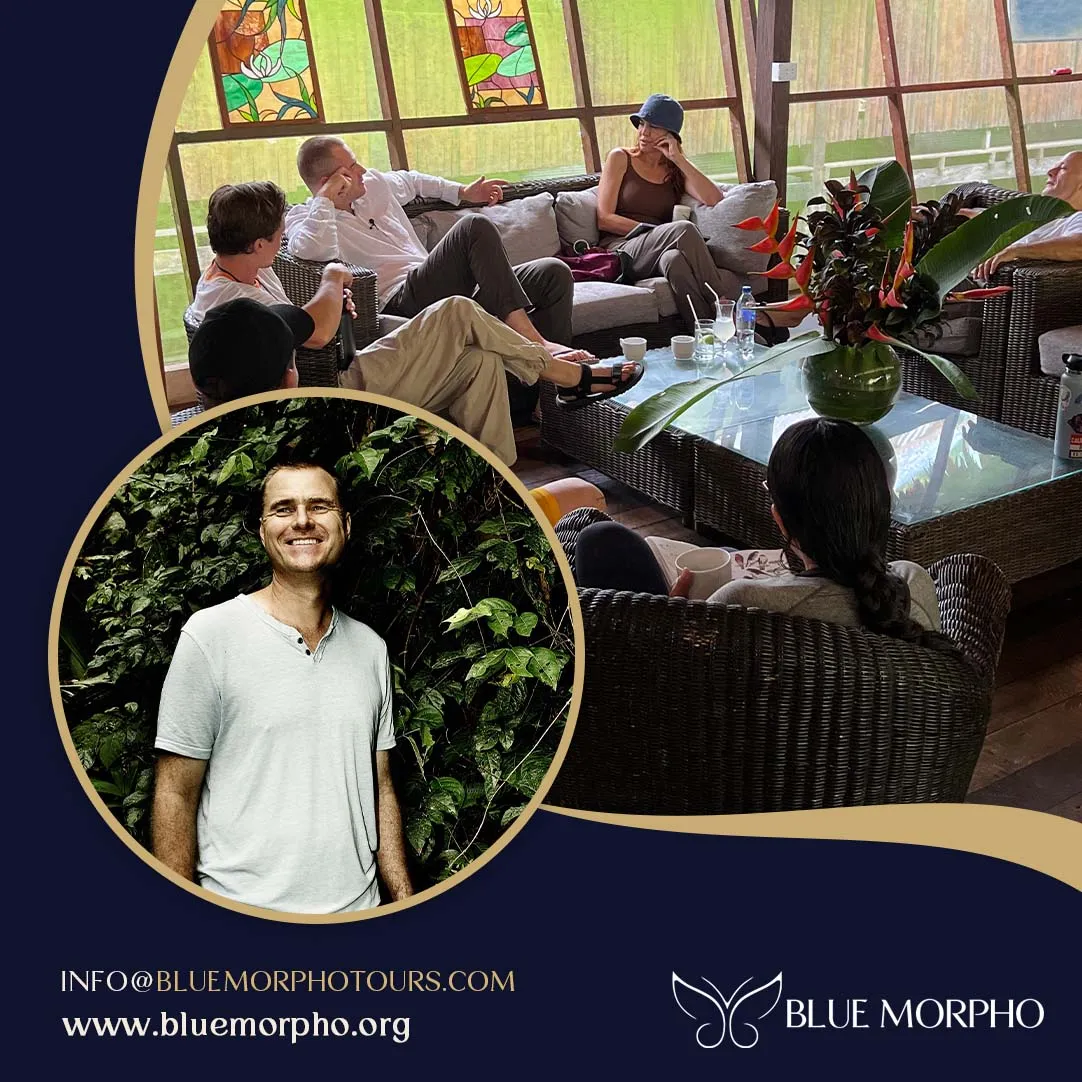
Maestro Hamilton Souther founded the center in 2002 after a multi-year apprenticeship in the Amazon under Don Julio Llerena Pinedo, and he became the first Westerner recognized as a Maestro Medico Vegetalista. That lineage-based apprenticeship shaped how Blue Morpho built its own Sitter/Coach and Facilitator training path, which covers intake screening, ceremonial safety protocols, integration support, and ethical practice.
In our experience, the participants who struggle most in ceremonies are often the ones who arrive without any preparation at all. A common pitfall we’ve seen in the wider industry is treating facilitator training as optional once someone has personal ceremony experience. Personal experience and trained facilitation are not the same skill.
What Guests Say About Trained Facilitation
The difference trained facilitation makes often shows up most clearly in guests’ own words.
“My experience at Blue Morpho was truly amazing. As this was my first experience with ayahuasca, I came in not knowing exactly what to expect, but from beginning to end, I felt safe, supported, and incredibly well cared for.” — Michael
“Decades of suffering has come to an end, and it is thanks to Maestro Hamilton and the Amazonian lineage he both embraced, and was embraced by. His passion, dedication, sincerity of heart, extensive knowledge and experience, and clear mastery of his medicine work, is evident in every ceremony, in each teaching. Attending these Blue Morpho retreats has been the absolute greatest gift I have ever given myself. Profound transformation, and deep gratitude to both Maestro Hamilton, and the whole team.” — Amy
Making Informed Choices About Ayahuasca Retreat Safety
Ayahuasca safety is not just about the plant. It is about the person holding space around it. Before joining any retreat, ask directly about facilitator training, screening process, and emergency protocols. A center with nothing to hide will answer clearly.
If you have questions about Blue Morpho’s training path or retreat safety protocols, reach out to our team at [email protected] or book your free discovery call here.
This article is for informational purposes only and is not medical advice. Speak with a qualified healthcare provider before participating in any plant medicine ceremony.