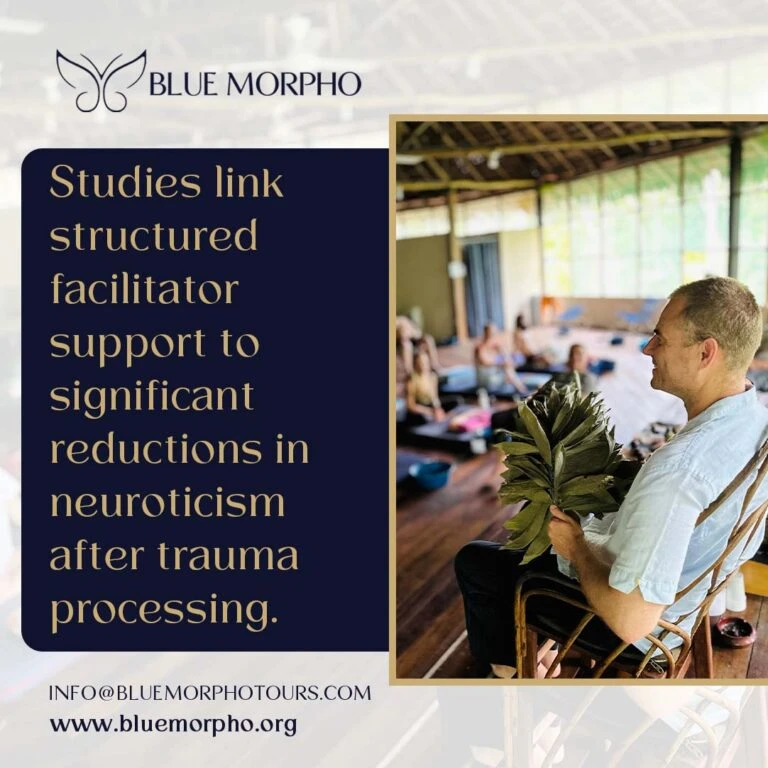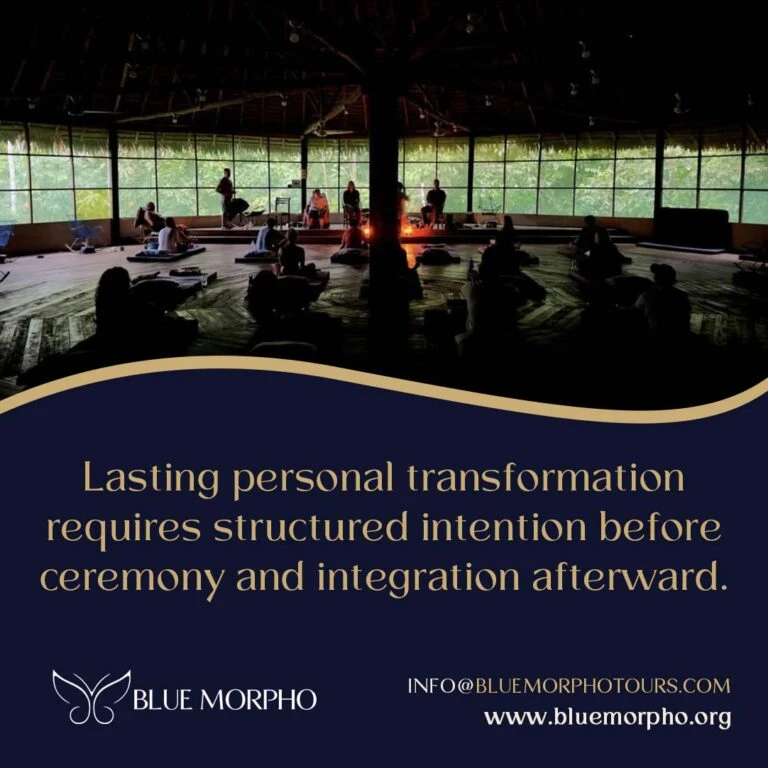
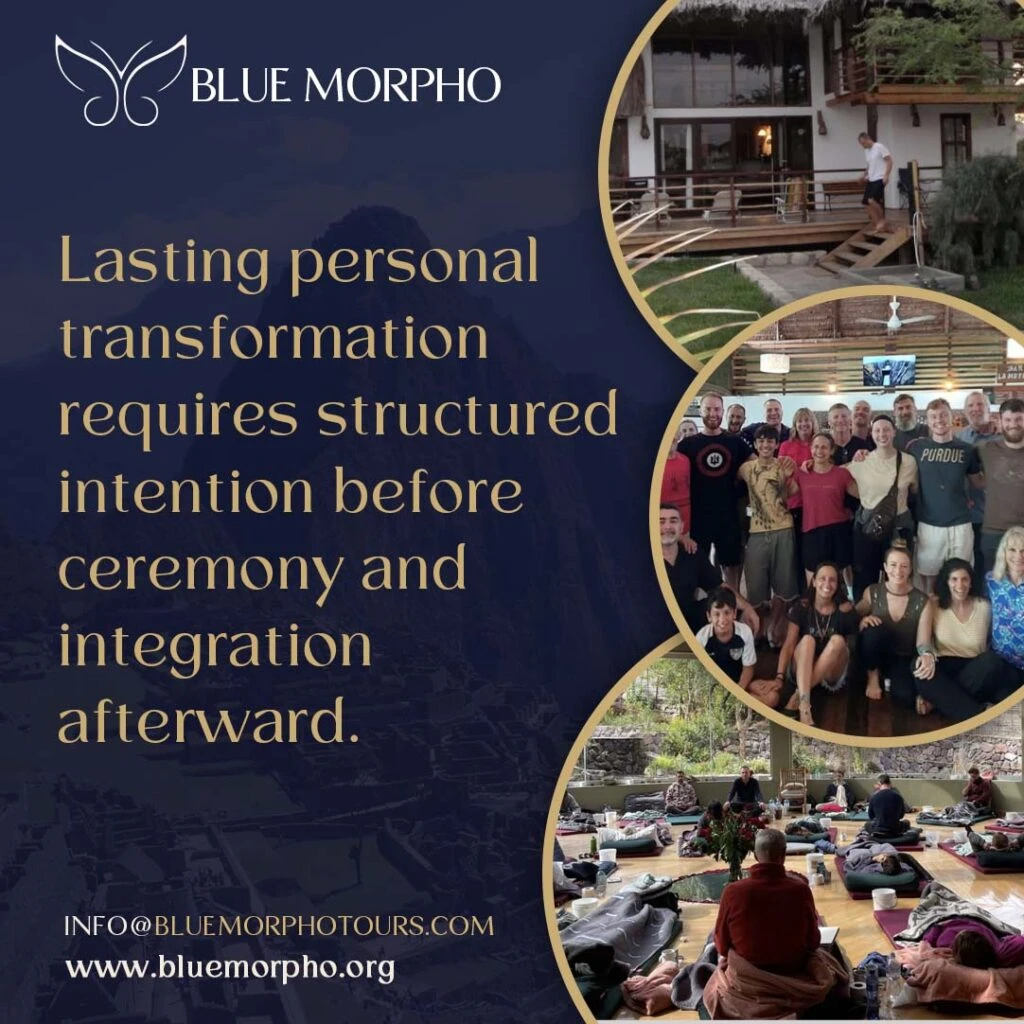
A single ceremony can crack something open. What Blue Morpho has learned, across two decades of guiding this work, is that what happens before that night and long after it is often what decides whether the opening becomes a lasting change.
What Does Reflection Look Like Before a Ceremony?
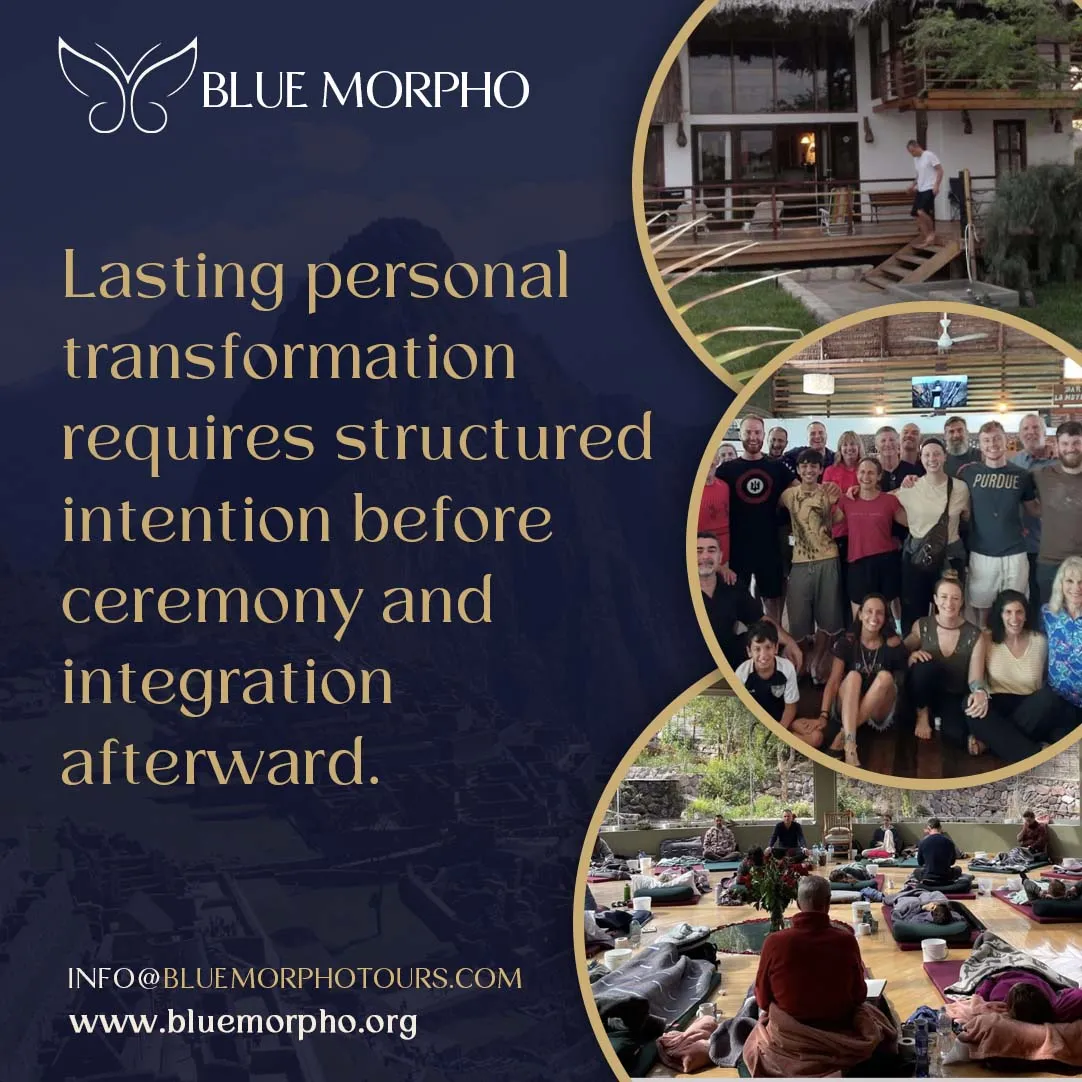
Before any guest drinks, we ask them to slow down and look honestly at what brought them to an ayahuasca retreat in the first place. This isn’t a formality. It shapes how the ceremony unfolds.
Guests are asked to consider:
- What pattern or experience they’re hoping to understand better
- What fears or expectations they’re bringing into the space
- What kind of support they’ll need once they return home
This groundwork matters for both ayahuasca and San Pedro retreats, since each medicine works at a different pace and asks something different of the person preparing for it.
Why Intention Shapes the Experience
A guest who arrives without a clear sense of why they’re there often spends the first ceremony simply adjusting to the unfamiliar. One who has done some honest reflection beforehand tends to move into the deeper work sooner. Neither path is wrong, but preparation changes what’s possible in the time available.
How Does Transformation Unfold During Ceremony?
Ceremony is where reflection meets direct experience. Guests often encounter memories, emotions, or patterns they hadn’t fully looked at before, sometimes gently, sometimes with real intensity.
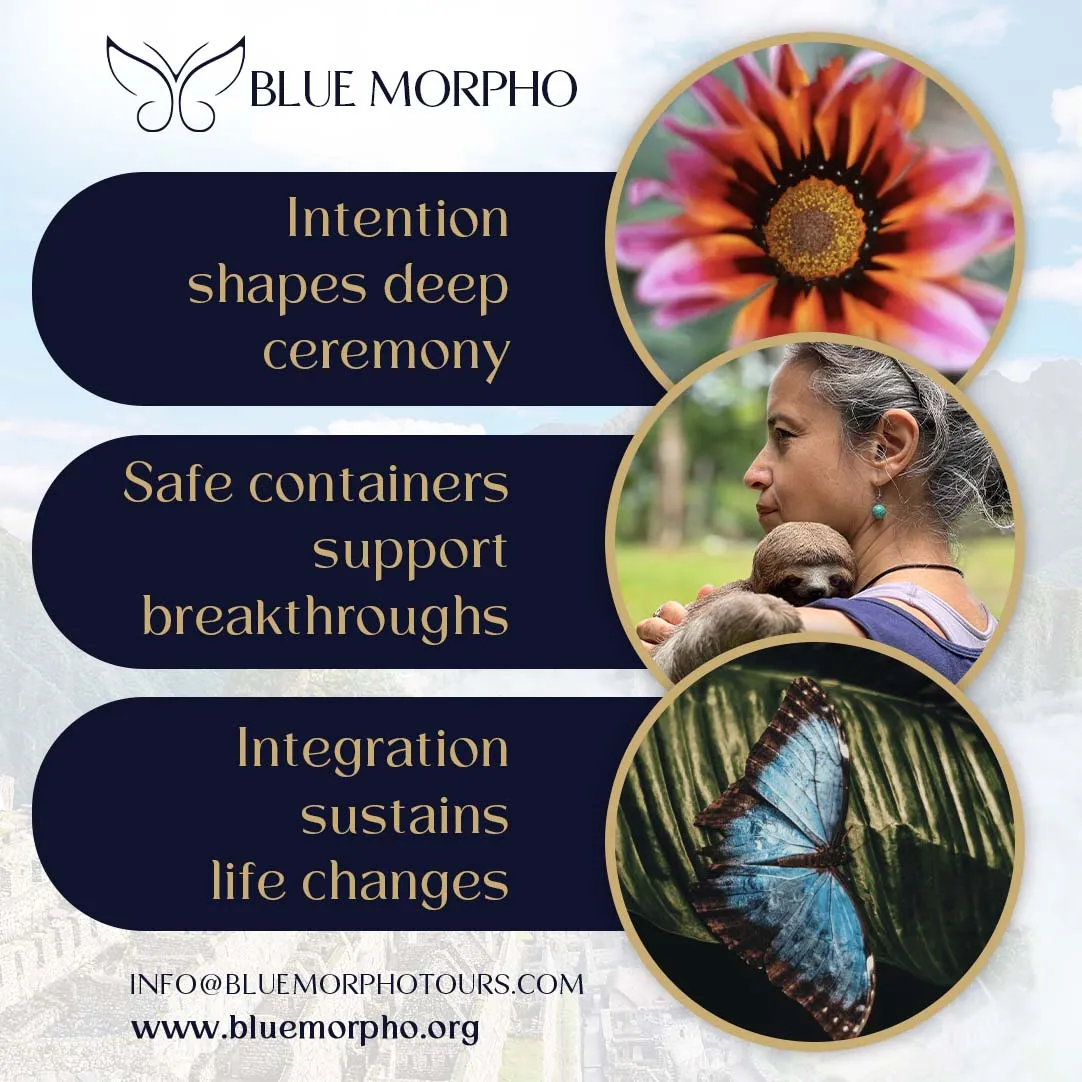
Our facilitators are present throughout, not to direct the experience, but to hold a steady, safe container around it. Icaros, breathwork, and the physical setting of the maloca all support this. This is one of the reasons Blue Morpho continues to work from a 170-acre reserve near Iquitos, Peru: the setting itself is part of how transformation is supported.
What Happens to Reflection After the Retreat Ends?
The work doesn’t end when a ceremony does. What a guest does in the days and weeks afterward often determines whether an insight becomes a lasting change or fades once ordinary routines return.
Why Integration Determines Whether Transformation Lasts
Integration is where reflection becomes practical. Research on psychedelic experiences consistently finds they can produce a lasting sense of improved wellbeing, though how that improvement is sustained afterward depends heavily on structured integration, an area researchers note remains under-studied relative to the experience itself. Journaling, community conversation, and continued contact with facilitators all help guests translate a ceremonial insight into something they can act on in daily life.
That’s part of why Blue Morpho maintains an ongoing community program, weekly calls, recorded sessions, and continued access to facilitators, so integration isn’t left to guests alone once they leave Peru.
How Do Ayahuasca and San Pedro Support Different Kinds of Reflection?
Guests choosing between an ayahuasca and San Pedro retreat, or combining both, often notice the medicines invite different kinds of reflection.
| Ayahuasca | San Pedro | |
| Pace of insight | Often sudden, layered | Gradual, expansive |
| Setting | Night ceremony, indoor maloca | Daytime, often outdoors |
| Common focus | Specific memories or patterns | Broader life perspective |
Some guests at a luxury ayahuasca retreat in Peru choose to work with both medicines across a single stay, using the contrast between them to reflect on the same questions from different angles.
A Process, Not a Single Ceremony
At Blue Morpho, reflection and transformation are never confined to one night in the maloca. The work begins with the questions a guest sits with long before stepping onto our ayahuasca retreat in Peru, and it continues well after they’ve returned home, carried forward through integration rather than left behind with the ceremony.
To know more about our retreat programs, reach out to us at [email protected] or explore our retreat programs.
This article is for general informational purposes and is not a substitute for professional medical or mental health advice. Anyone considering plant medicine ceremonies should consult a qualified healthcare provider beforehand, particularly if they have existing physical or psychological health conditions.