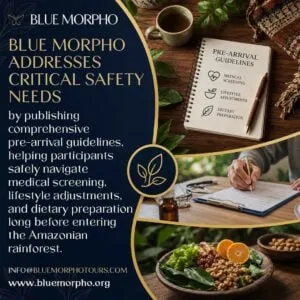
Preparing for an Ayahuasca and San Pedro retreat means following the pre-retreat dieta, disclosing and safely adjusting certain medications under medical guidance, setting a clear intention, and choosing a reputable center. Good preparation protects your safety and helps you get far more from the experience, and most of the work happens in the weeks before you arrive in Peru. At Blue Morpho, we start guiding you through that groundwork long before your first ceremony.
Key Takeaways
- Start several weeks ahead. The dieta, medication review, and mindset all take time to do properly.
- Some medications, especially SSRIs and other antidepressants, can be dangerous with ayahuasca. Disclose everything and follow medical and retreat guidance.
- The dieta (avoiding specific foods, alcohol, and recreational substances) is a core part of physical preparation.
- A clear intention shapes the experience as much as any logistics.
- Choosing a reputable, well-staffed retreat in Iquitos, Peru, matters far more than finding the lowest price.
What Is an Ayahuasca and San Pedro Retreat?
An Ayahuasca and San Pedro retreat is a guided, multi-day program where participants take part in traditional ceremonies under the care of experienced facilitators. Ayahuasca is a brew made from the Banisteriopsis caapi vine and chacruna leaf; San Pedro (also called Huachuma) is a mescaline-containing cactus used in Andean traditions. Both are central to the plant medicine retreats that have made the Amazon a destination for this kind of work.
For many seekers, Ayahuasca in Iquitos, Peru, has become the reference point. The city sits in the Peruvian Amazon, with direct access to traditional knowledge and experienced practitioners, which is why so many established Ayahuasca retreats are based there. Whether you’re drawn to a single medicine or a combined Ayahuasca and San Pedro retreat, the preparation principles are largely the same.
How Far in Advance Should You Prepare?
Give yourself at least two to four weeks, and longer if you take medication that needs review. Preparation isn’t only about diet: it’s about arriving rested, clear, and physically ready. Rushing in the day before usually means a harder, less grounded experience. Treat the lead-up as part of the journey, not a box to tick.
The Dieta: Preparing Your Body
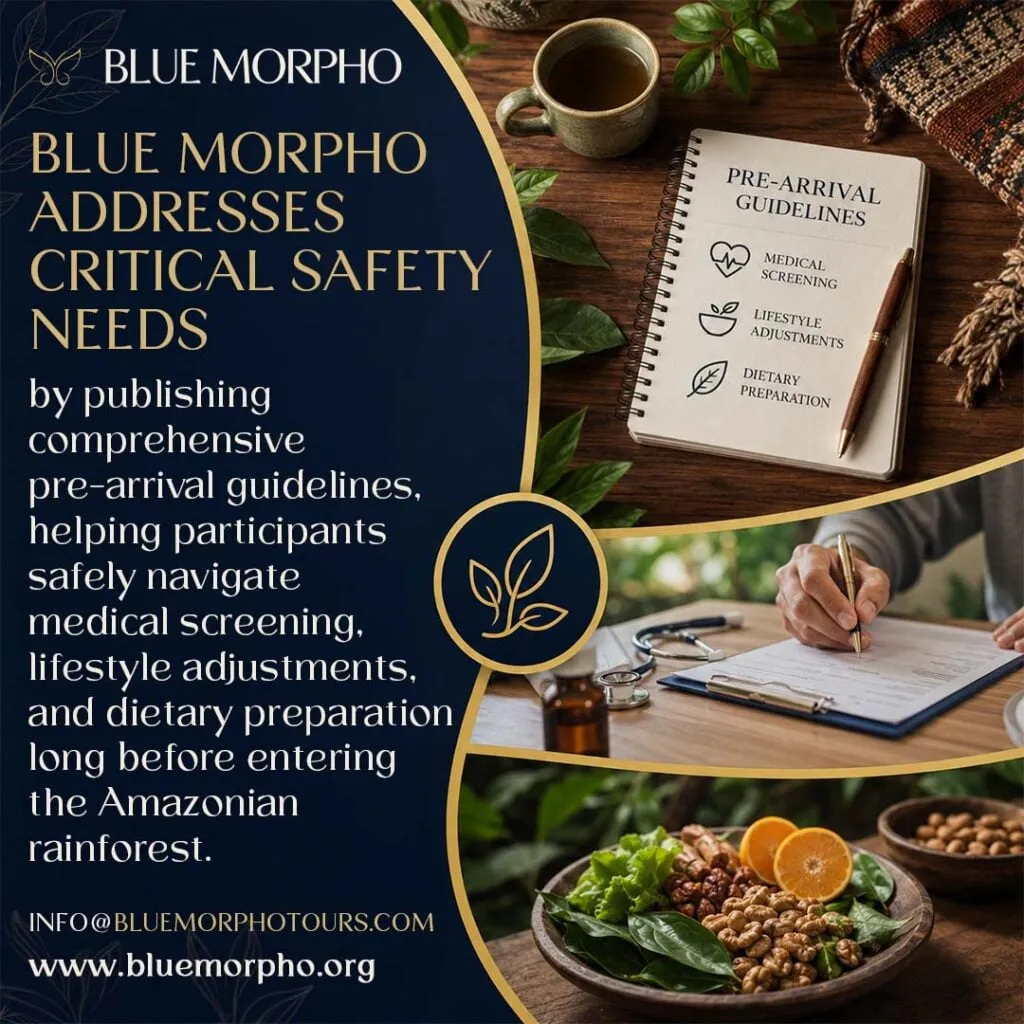
The “dieta” is the traditional preparation diet, and most retreats ask you to follow a version of it for at least one to two weeks beforehand. The point is to give your body a clean baseline and reduce anything that interacts poorly with the medicine.
Commonly asked to avoid:
- Alcohol and recreational drugs
- Pork, red meat, and heavily processed or fried foods
- Aged, fermented, and high-tyramine foods (aged cheeses, cured meats, soy sauce, fermented products)
- Excess salt, sugar, caffeine, and spicy food
- Sexual activity in the days immediately before (per many traditions)
Lean toward fresh fruits and vegetables, simple grains, and plenty of water. Your specific retreat will send its own dieta – follow theirs, since requirements vary.
Medications and Health: The Step You Cannot Skip
This is the most important part of preparing, and it’s where honesty matters most. Ayahuasca contains natural MAO-A inhibitors (MAOIs) that can interact with certain antidepressants – particularly SSRIs – as well as some medications and supplements. These interactions may increase the risk of serotonin syndrome, a rare but potentially life-threatening condition. A 2026 study published in Frontiers in Molecular Biosciences modeled ayahuasca–SSRI interactions and found clinically relevant changes in the way key ayahuasca compounds are processed in the body, reinforcing the importance of thorough medication screening before participating in a ceremony.
What this means in practice
Disclose every medication, supplement, and health condition on your intake forms, and never stop or taper a prescription on your own. Any change must be planned with your prescribing doctor, and reputable retreats will work with you on timing. A well-run center screens carefully and will turn people away when it isn’t safe – that’s a sign of a good plant medicine retreat, not an obstacle.
Preparing Your Mind: Setting an Intention
An intention is simply the reason you’re going. It might be healing, clarity on a decision, grief you’re carrying, or a pattern you want to understand. You don’t need the perfect wording. What helps is spending time before the retreat reflecting honestly on what you’re bringing and what you hope to face. Journaling in the weeks beforehand is one of the simplest, most effective tools.
Physical and Practical Preparation
Arrive rested. In the final week, ease off intense work schedules, late nights, and screens where you can. Gentle movement, time outdoors, and good sleep do more than any supplement. Sort your travel logistics early so the last few days aren’t stressful, and build in a buffer day after you land before ceremonies begin.
What to Pack for a Retreat in Iquitos, Peru
The Amazon is hot, humid, and remote, so pack accordingly:
- Loose, comfortable, light clothing and a warm layer for nights
- Insect repellent, sunscreen, and a refillable water bottle
- A flashlight or headlamp, and any personal toiletries
- A journal and pen for intentions and integration
- Comfortable sandals and quick-drying clothes
- Copies of your medical information and travel documents
Your retreat will provide a full packing list – this covers the essentials most people forget.
Ayahuasca vs. San Pedro: What to Expect
If you’re attending a combined retreat, it helps to know that the two medicines feel quite different.
| Ayahuasca | San Pedro | |
| Source | Brew from the Banisteriopsis caapi vine and chacruna leaf | Mescaline-containing cactus from the Andes |
| When ceremonies are held | Usually at night | Often during the day |
| Typical duration | Around 4–6 hours | Longer, often 8–12 hours |
| Commonly described as | Introspective and visionary; purging is common | Gentler and more grounding; a connected, open-hearted quality |
| Preparation focus | Strict dieta and medication safety are critical | Similar dieta; hydration and pacing for a long day |
Experiences vary widely from person to person, so treat this as a general guide, not a promise of what yours will be like.
How to Choose a Reputable Ayahuasca Retreat
Price shouldn’t be the only deciding factor. Whether you want a simple program or a luxury Ayahuasca retreat, look for the same fundamentals:
- Experienced, named facilitators and a real medical screening process
- Clear pre-retreat guidance on the dieta and medications
- A safe participant-to-facilitator ratio and proper aftercare
- Honest communication, verifiable reviews, and transparency about what’s included
- A focus on integration, not just ceremonies
A center that screens thoroughly and answers your questions directly is showing you how it operates. If a retreat downplays safety or rushes you, treat that as a warning sign. Blue Morpho, for instance, screens every participant and shares its preparation guidance well before arrival.
Preparing for Integration
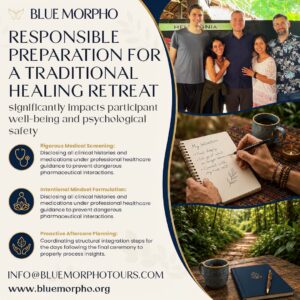
Integration is how you carry insights into daily life, and the best time to plan for it is before you go. Think about what support you’ll have when you return – time to rest, someone to talk to, a way to keep reflecting. The experience itself is only part of the work; what you do afterward is where much of the lasting value lives. This is one reason Blue Morpho builds integration support into its programs rather than ending at the final ceremony.
Frequently Asked Questions
Is ayahuasca legal in Peru?
In Peru, ayahuasca has long been used in traditional ceremonial settings and has been officially recognized as part of the country’s cultural heritage. That standing is one reason Peru has become an established destination for retreats.
Is purging a normal part of an ayahuasca ceremony?
Yes. Purging – usually vomiting, and sometimes crying or other forms of release – is considered a natural and common part of the experience. Facilitators expect it, and the ceremony space is set up to handle it comfortably.
How many ceremonies does a typical retreat include?
It depends on the program and its length. Shorter retreats may include two or three ceremonies, while longer ones include more, usually spaced with rest and integration days in between. Your retreat will share its full schedule in advance.
What happens if I have a difficult experience during a ceremony?
A challenging moment is not the same as an unsafe one, and difficult passages are common. Trained facilitators stay present throughout the ceremony to help you feel supported and grounded until it passes.
Can first-timers attend, or do I need previous experience?
Many participants are first-timers. Reputable retreats screen carefully, explain what to expect, and guide newcomers through preparation, so prior experience isn’t required – readiness and honesty on your intake forms matter more.
A Final Word on Preparation
Preparing well is the difference between arriving anxious and arriving ready. The dieta, the medical disclosure, the intention, and the choice of a trustworthy center all work together to keep you safe and open. For more than two decades, Blue Morpho has guided people through this process in the Peruvian Amazon near Iquitos, with an emphasis on safety, preparation, and support before, during, and after the ceremony.
If you’re considering a plant medicine retreat, take the preparation as seriously as the experience itself – and when in doubt, ask your retreat and your healthcare provider. To learn more or ask questions, contact us at [email protected] or visit our website.