If you’re researching ayahuasca retreats, you’ve probably noticed that almost every center says location matters. But does it actually change the experience, or is it just marketing language? At Blue Morpho, founded by Hamilton Souther, research and two decades of ceremonial practice point to the same answer: the setting is not incidental. It shapes the ceremony itself.
Why Setting Is Part of the Medicine, Not Just the Backdrop
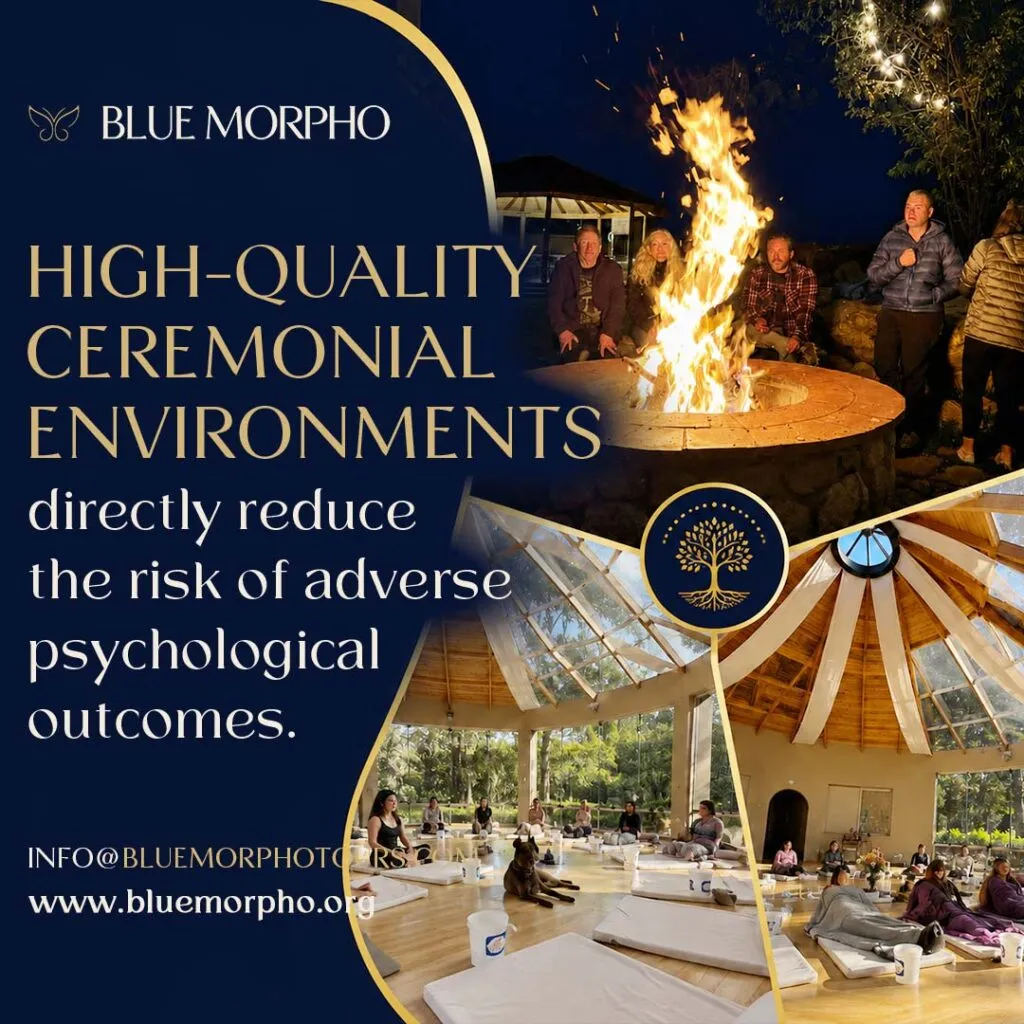
Ayahuasca ceremonies have always depended on more than the plant. A peer-reviewed study on ceremonial environments found that setting is a real moderator of outcomes. Higher-quality settings reduced the chance of a difficult experience and supported a more meaningful one (PMC, 2022). That single finding explains a lot about why Blue Morpho has operated from the same stretch of Peruvian Amazon for over two decades rather than relocating for convenience.
Iquitos itself has long been a center of this tradition, which is part of why Blue Morpho tours consistently return to this region rather than offering ceremonies elsewhere. The city sits deep in the rainforest, surrounded by many of the same medicinal plants and ecological conditions that have shaped Amazonian healing traditions for generations.
What “Setting” Actually Means in Practice
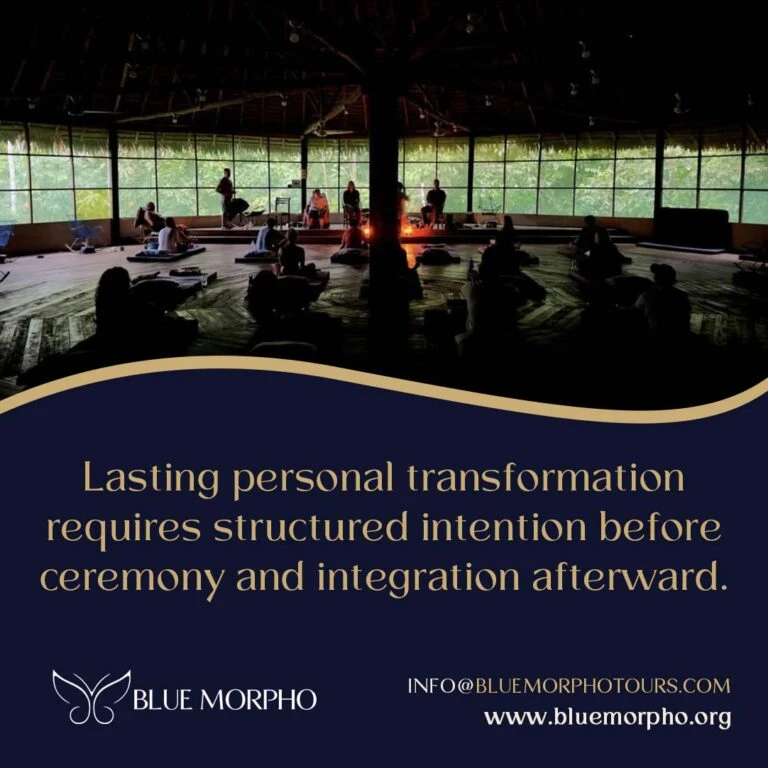
Setting isn’t abstract. It includes sound, light, isolation from modern distraction, and the presence of an experienced guide. At a jungle maloca, ceremonies happen under open sky, with natural sound replacing the noise of daily life. Based on Blue Morpho’s experience facilitating ceremonies, many participants appear to settle into the process more easily before the ceremony begins when immersed in the rainforest environment.
What Daily Life Looks Like on a Private Amazon Reserve
Blue Morpho’s Ayahuasca retreat operates on a 170-acre private reserve, built in 2006 as one of the earlier centers of its kind open to international guests. Guests stay in hand-built bungalows, with access to a private swimming lake and an open-air jungle shower beneath the forest canopy. This isn’t primitive camping. It’s a purpose-built space designed around the ceremony, not around tourism.
A common pitfall we’ve seen: guests assume “remote” means “unprepared.” In practice, remoteness requires more structure, not less, which is why intake and preparation matter as much as the ceremony itself.
Understanding Safety in a Remote Jungle Setting
Peru’s government formally recognized traditional ayahuasca use as national cultural patrimony in 2008, distinguishing protected ceremonial use from casual or commercial use (ICEERS). That legal context matters, but it doesn’t replace personal screening. Certain medications and health conditions carry real risks, which is why thorough intake conversations should happen well before travel.
Questions to Ask Before Choosing a Jungle-Based Retreat
- How does the center screen for medical contraindications?
- What is the emergency response plan for a remote location?
- Who is leading the ceremony, and what is their training background?
How the Rainforest Shapes the Ceremonial Experience Itself
Beyond safety, the rainforest itself supports the kind of introspection people are often seeking. Removing phones, traffic, and artificial light tends to slow people down before they even sit for ceremonies. This observation is broadly consistent with published research suggesting that environmental factors contribute to participants’ subjective experiences.
Jungle-Origin Settings vs. Other Locations
Ceremonies outside the Amazon may still follow respectful traditions, although they take place outside the ecological environment where ayahuasca originated and where many traditional practices developed. Andean cities host ceremonies too, though the plant itself grows in the lowland jungle, not the mountains. That distinction is worth understanding before booking Blue Morpho Retreats or any other Amazon-based program.
What You Should Know First
Q1: What should I do to prepare before attending a jungle-based retreat?
Complete any required medical screening, follow the recommended dietary guidelines, and arrive with realistic expectations about the jungle environment. Good preparation supports both your comfort and your retreat experience.
Q2: Can beginners handle the physical environment, including heat, insects, and isolation?
Most first-time guests adapt within a day or two. The lodge is designed for the jungle environment, and experienced staff are there to help newcomers settle in.
Q3: Do I need to travel to the Amazon for an authentic experience?
Not strictly, but the plant’s origin and traditional practice are rooted there, which many practitioners consider meaningful.
Choosing a Setting That Matches the Medicine
The Amazon is closely connected to the plant’s origin, the history of Indigenous ceremonial traditions, and research suggesting that environmental setting contributes to participants’ overall experiences. Anyone comparing retreat options should weigh setting as seriously as price or itinerary length.
To learn more about Blue Morpho’s retreats in the Peruvian Amazon, contact [email protected] or visit our website.