For many people arriving at an ayahuasca retreat in Iquitos, Peru, the jungle isn’t the hard part. Neither is the medicine. The hard part is the moment just before the ceremony begins, when they’re asked to do something they’ve spent years avoiding: let go.
Why Does Surrender Feel Difficult at First?
Surrender is often misunderstood as passivity, but psychologically it’s closer to a controlled release. Most people spend their daily lives managing outcomes: at work, in relationships, even in their own emotional responses. Arriving at a ceremony space and being asked to simply stay present with whatever arises can feel disorienting before it feels freeing.
This resistance is normal. Facilitators experienced in plant medicine retreats generally see it as the first psychological threshold guests need to move through, not a sign that something is wrong.
What Happens Psychologically When You Let Go?
Once resistance eases, many guests describe a shift from monitoring their experience to simply being inside it. Thoughts and emotions that are normally suppressed or rationalized are allowed to surface without immediate judgment.
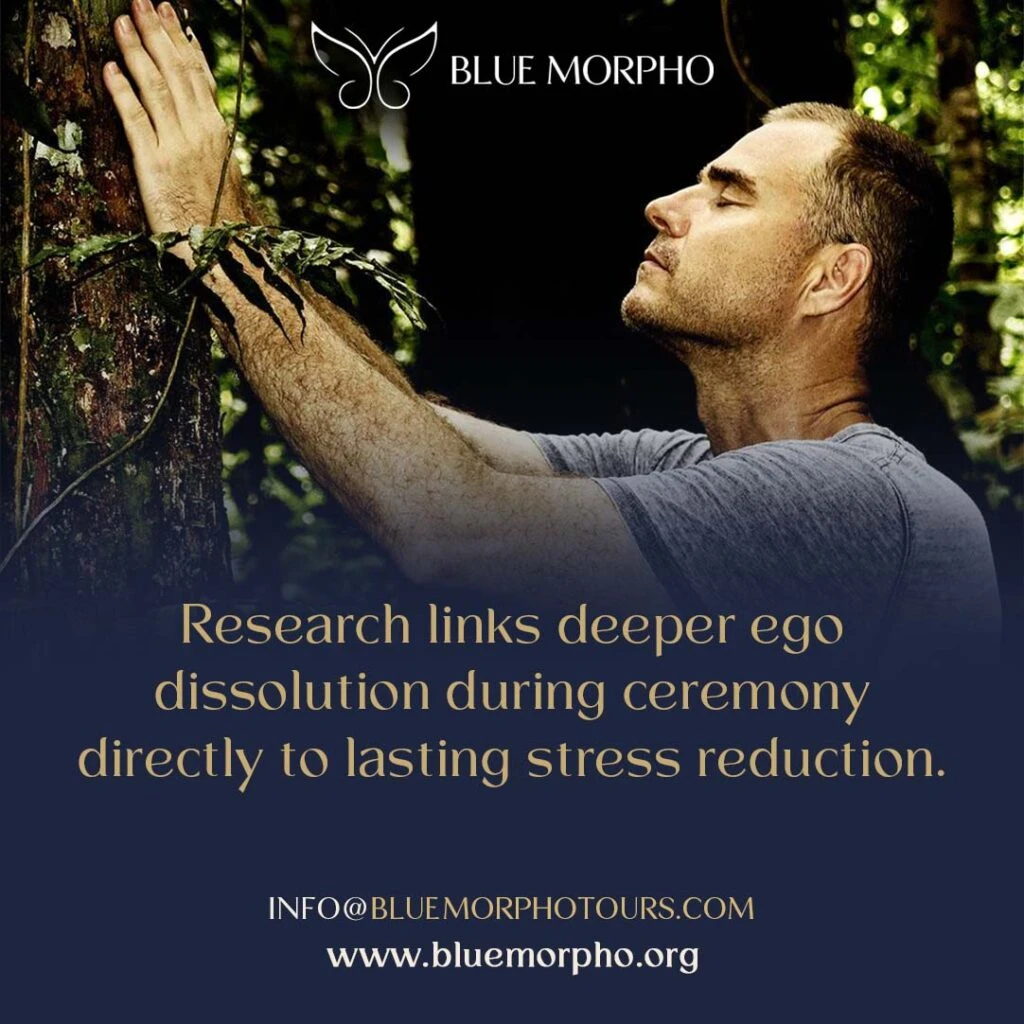
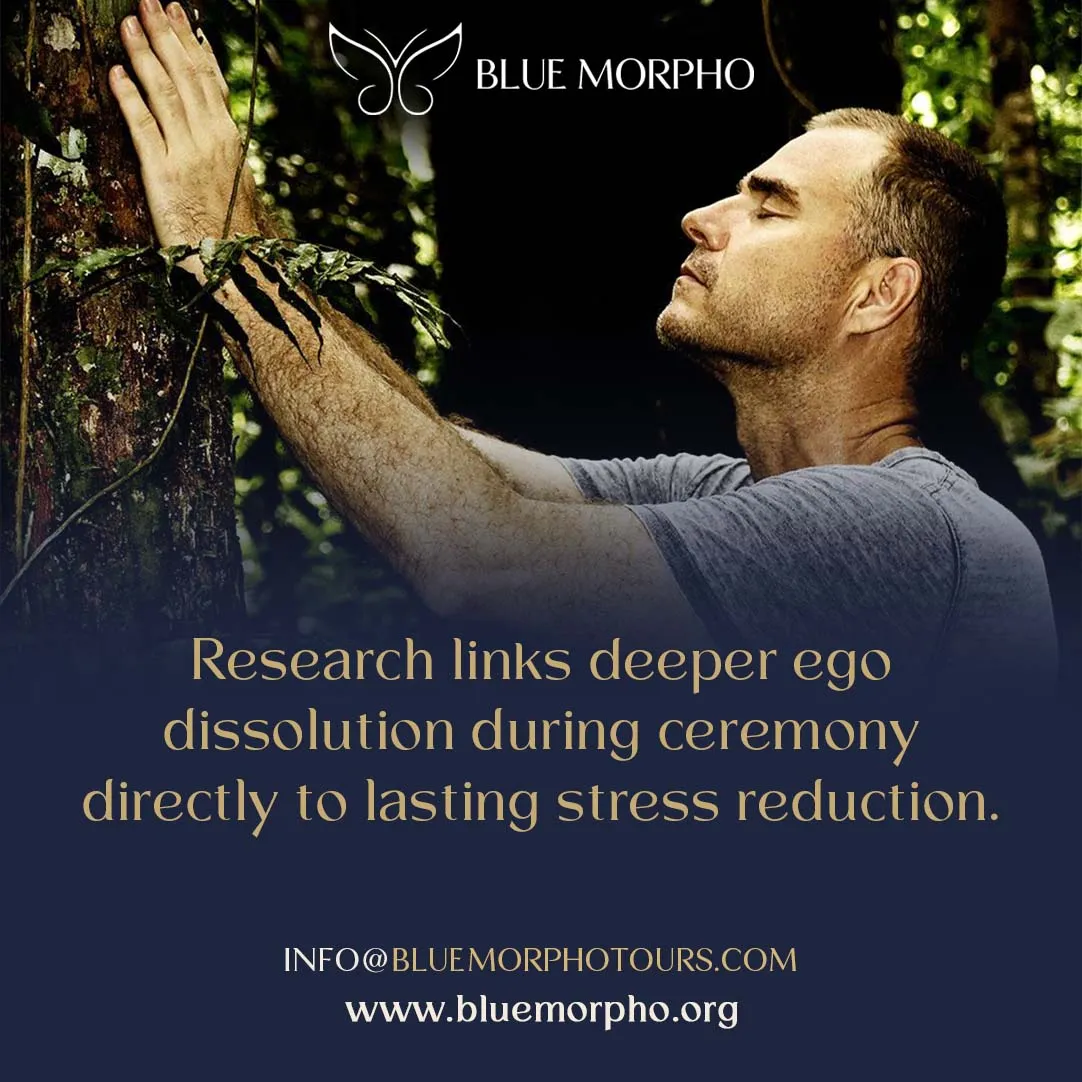
A field study of 57 ayahuasca ceremony attendants in the Netherlands and Colombia assessed participants before the ritual, the day after, and four weeks later to examine how this kind of psychological release relates to lasting change. The researchers found that reductions in depression and stress, along with improvements in convergent thinking, were significantly correlated with the degree of ego dissolution participants experienced during the ceremony itself. In other words, the more fully someone let go of their usual sense of self during the ceremony, the more the psychological benefits tended to carry forward afterward.
The Role of Control in Everyday Life
Much of this difficulty traces back to habits built long before the retreat. Constant self-monitoring, a common trauma response, keeps people mentally reviewing their choices in real time. In ceremony, that pattern is deliberately interrupted, which is often what makes the experience feel so different from ordinary reflection or talk therapy.
How Can You Trust a Retreat Center to Support Surrender Safely?
Surrender isn’t left unguided. A well-run ayahuasca and San Pedro retreat builds specific structure around this process so it stays safe rather than overwhelming:
- Clear preparation beforehand, so guests understand what to expect physically and emotionally
- A held ceremonial space, with facilitators present to respond if someone becomes distressed
- Icaros and ritual structure that give the experience a rhythm to return to
- Integration support afterward, so insights from surrender don’t stay isolated to the ceremony night
How Do Ayahuasca and San Pedro Differ in the Experience of Surrender?
While both plant medicine retreats can involve psychological surrender, the pacing differs:
| Ayahuasca Ceremony | San Pedro Ceremony | |
| Onset | Faster, more intense | Gradual, longer build |
| Duration | Several hours | Full day, often outdoors |
| Setting | Indoor maloca, night ceremony | Daytime, often in nature |
| Common experience of surrender | Sudden, requires quick adjustment | Slower unfolding, more time to adapt |
Guests choosing a luxury ayahuasca retreat in Peru sometimes combine both medicines across a retreat program, since the different pacing can support surrender in different ways depending on the person.
What Do Guests Say About the Experience of Surrender?
Guests often describe the shift as something they couldn’t have predicted going in. One returning guest at Blue Morpho put it this way:
“I have been at this place many times, and each time I go, I love it more and more. The experience I’ve had there has changed my life forever. I’m happy and grateful. The staff there are extremely caring and knowledgeable; I’ve never met anyone with more integrity and honesty. I would highly recommend Blue Morpho Ayahuasca Retreat Center as a safe, well-run, comfortable place where you can get real help to deal with whatever you came with.” — Viktoria Aya.
That sense of being held by knowledgeable, caring staff is often what makes surrender feel possible in the first place. Letting go is easier when someone trustworthy is holding the space around you.
A Threshold, Not a Single Moment
Surrender during an ayahuasca retreat rarely arrives as one dramatic switch flipping. It unfolds in layers, sometimes within a single ceremony, sometimes stretched across an entire retreat, each layer asking a little more of you than the last. What stays constant is the support around it: surrender goes further, and feels safer, when it’s held by preparation beforehand and integration afterward, not left as a single isolated moment.
If you’re curious what that process looks like in practice, reach out to Blue Morpho at [email protected] or explore our retreat programs.
This article is for general informational purposes and is not a substitute for professional medical or mental health advice. Anyone considering plant medicine ceremonies should consult a qualified healthcare provider beforehand, particularly if they have existing physical or psychological health conditions.