A weekly therapy session and a multi-day plant medicine retreat aren’t competing for the same hour. They’re built on different structures entirely. If you’re weighing an ayahuasca and San Pedro retreat against ongoing therapy, here’s what that structural difference actually looks like.
Why Does Immersion Matter More Than an Hour a Week
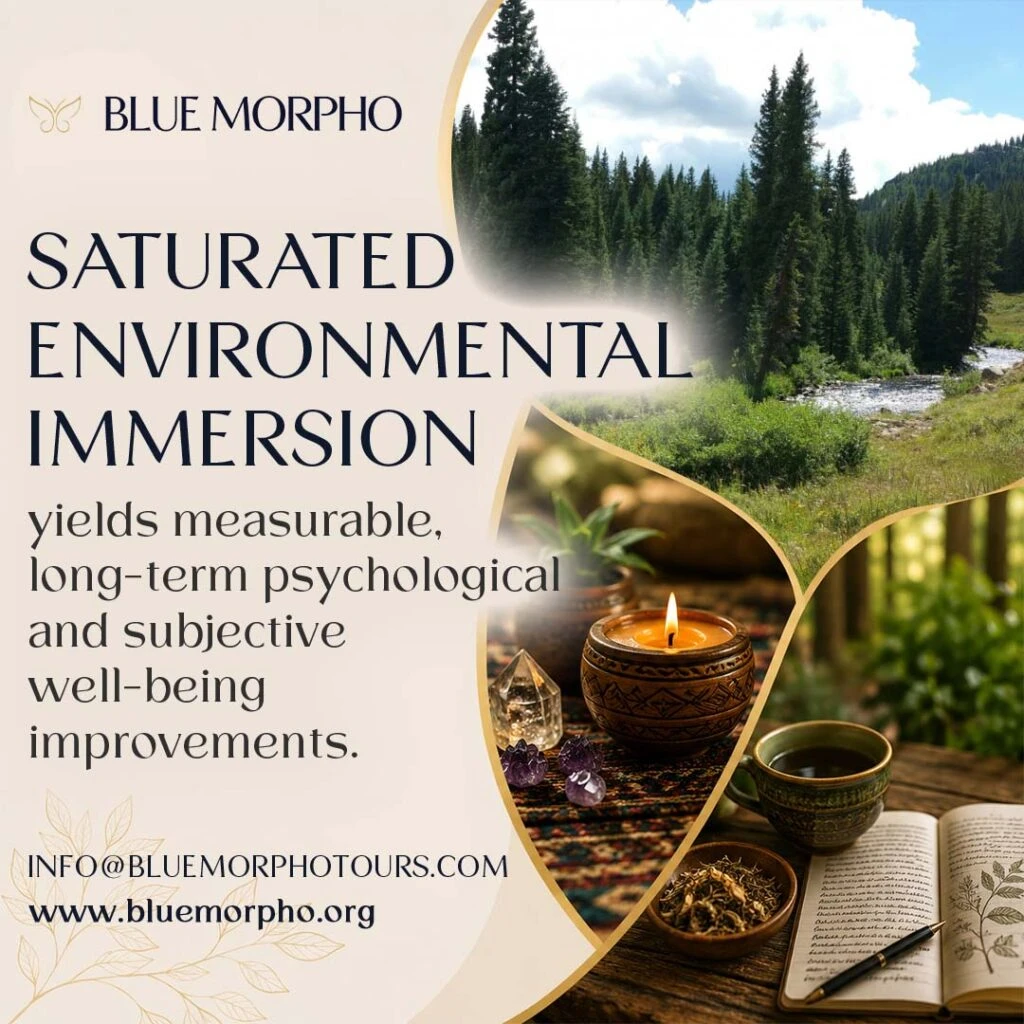
Therapy works in increments: fifty minutes, then a week of ordinary life before the next session. A retreat compresses that timeline. Days are spent entirely on preparation, ceremony, rest, and reflection, with nothing else competing for attention.
Time Away From Daily Life
Removing someone from email, family roles, and daily obligations isn’t incidental. A large international survey of over 10,000 ayahuasca drinkers found that ceremony and setting characteristics were significantly associated with mental health and wellbeing outcomes. Research suggests that ceremonial setting may influence participants’ experiences and reported outcomes, although the specific contribution of the environment continues to be studied.
How Is Group Ceremony Different From One-on-One Therapy
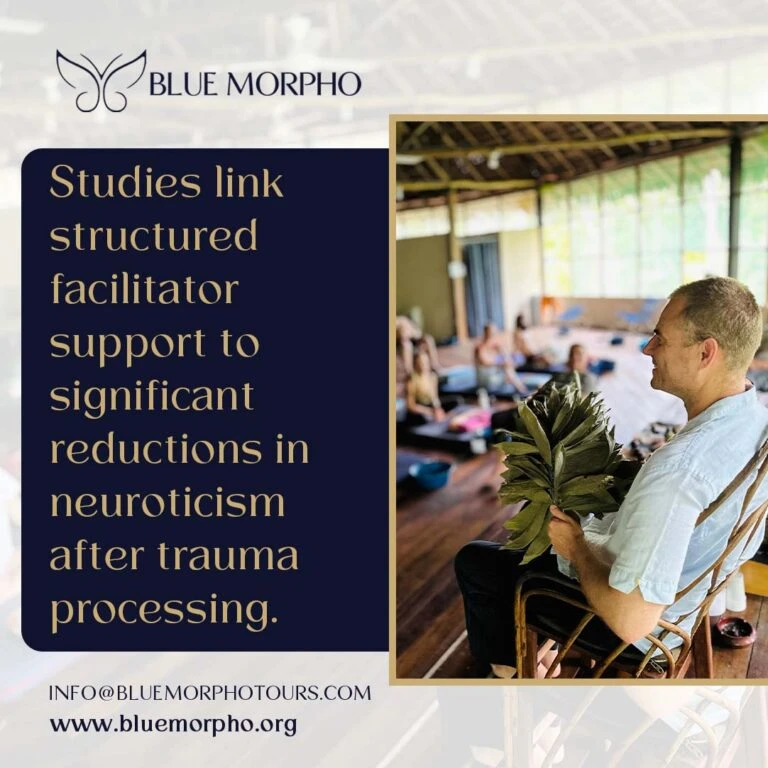
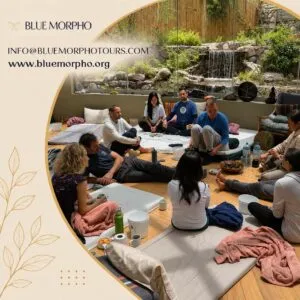
Individual therapy is, by design, one person and one therapist. Ceremonial retreats are usually held in a group, with participants moving through the same ritual structure together. Facilitators trained in this tradition also build in specific preparation and integration practices before and after the ceremony, drawn from what experienced ceremony leaders report actually helps (Callon, Williams & Lafrance, 2021).
Why Preparation and Integration Matter
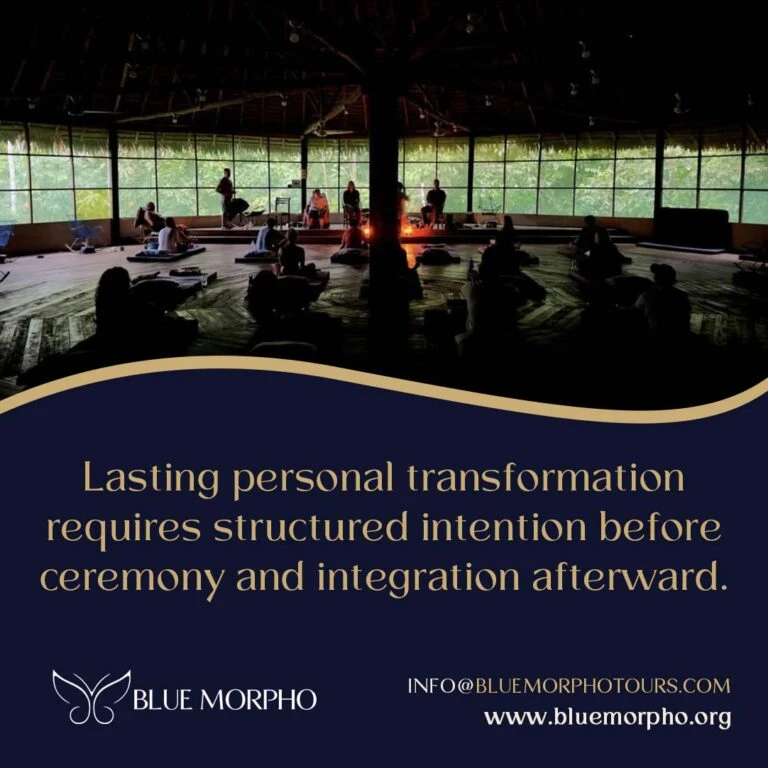
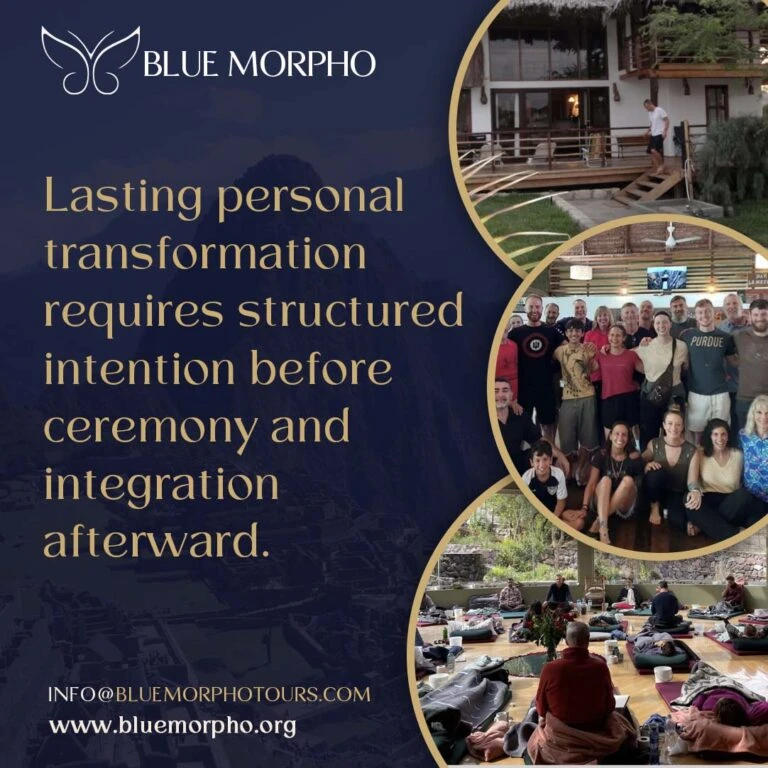
At Blue Morpho, preparation starts before a guest ever drinks, and integration continues after they leave. One thing we’ve learned over 20+ years of facilitation: a ceremony without deliberate integration afterward is where people most often lose the benefit of the work. That follow-through is the part easiest to skip and most important to keep.
What Ongoing Integration Looks Like
For Blue Morpho guests, that continuity includes weekly virtual community sessions, a private group for questions and connection, and access to an archive of past ceremonies and talks, so integration doesn’t stop when the retreat ends.
A naturalistic six-month study of participants at a retreat center in the Peruvian Amazon recorded a statistically significant drop in depression scores from before to after the retreat. This wasn’t a placebo-controlled trial, so it can’t be read as equivalent to a clinical study. But it does show a measurable pattern in the retreat setting specifically, not just in a lab.
What a Psychedelic Retreat Isn’t
A psychedelic retreat is not a replacement for ongoing psychiatric or medical care, and it isn’t the right fit for everyone. Before choosing between a retreat and continued therapy, or combining both, it’s worth asking:
- Does the facilitator screen for psychiatric history, not just physical health?
- Is there a clear plan for integration after you go home?
- Does the retreat disclose what it can’t guarantee?
- Is ongoing support available beyond the ceremony days themselves?
Where the Setting Itself Becomes Part of the Work
Plant medicine retreats vary widely, from basic accommodations to a luxury ayahuasca retreat with private lodging and daily hospitality. Blue Morpho’s retreats sit inside a 170-acre private reserve near Iquitos, Peru, and include a few specific features guests won’t find in a therapist’s office:
- A custom indoor and outdoor maloca built for a ceremony under the open sky
- A private swimming lake and pool on the property
- Hand-built bungalows rather than shared clinical space
- An open-air jungle shower and forest meditation spaces as part of the daily rhythm
None of these details are clinical findings; they’re descriptions of the actual setting, included because the setting itself has been linked to outcomes in ceremonial contexts.
What Else Should You Know About Plant Medicine Retreats
- Can I combine therapy with a plant medicine retreat?
Yes, in some cases. A plant medicine retreat can complement, but not replace, ongoing therapy or medical care. - Why is integration considered as important as the ceremony?
Integration helps translate insights from the retreat into meaningful, lasting changes in daily life. - How can I tell if a plant medicine retreat is reputable?
Choose a retreat that prioritizes participant screening, preparation, integration, emergency protocols, and transparency about the current evidence.
Curious What This Looks Like in Practice
An ayahuasca or San Pedro retreat offers structure that a therapist’s office wasn’t built for: immersion, group ceremony, and setting working together. Whether that fits your situation is worth thinking through carefully. If you’re curious how ancient plant medicine and modern research meet in the Amazon, visit us online or email [email protected] to learn more.