Choosing Blue Morpho for an ayahuasca retreat is not just about booking a trip. It is about trusting people with one of the most personal and vulnerable experiences of your life.
As ayahuasca retreats become more popular, it is harder to tell the difference between centers built on real tradition and those built mainly for tourism. For anyone seeking healing, clarity, or spiritual growth, that difference matters.
An ethical ayahuasca retreat should offer more than ceremony. It should be grounded in verified lineage, trained facilitators, clear safety protocols, and genuine care before, during, and after the experience.
Our standard has been shaped through more than two decades of ceremonial work in the Amazon. It is not a marketing promise. It is the foundation of how the retreat is held.
Why Ethics in Ayahuasca Ceremonies Matter More Than Ever
Plant medicine healing sits at a crossroads. As ayahuasca becomes more widely known, the need for ethical, well-supported ceremony spaces has never been more important.
NIH-hosted research on psychedelic-assisted therapy notes that “set and setting” – the participant’s mindset and the physical, social, and cultural environment – are important factors in improving benefits and reducing risks during psychedelic experiences.
A large international survey of 6,877 ayahuasca participants (Perkins et al., 2021, Frontiers in Pharmacology) found that ceremony characteristics, support practices, and motivations were all significant predictors of mental health outcomes. In other words, the ceremonial container – not just the medicine itself – can influence whether an experience becomes supportive or difficult.
Research published by SAGE on ayahuasca ceremony leaders also highlights the role of preparation and integration in responsible ceremonial work. Ethical practice should not begin and end with the ceremony. It should include participant readiness beforehand and structured support afterward.
This is why the retreat you choose matters deeply. Not every center carries true lineage. Not every guide has undergone a formal apprenticeship. And not every space offers real support before, during, and after the ceremony.
What a Lineage-Based Approach Actually Looks Like
Amy, a participant who attended two retreats, put it plainly:
“The best two weeks of my life, 10 out of 10. I truly cannot give a higher commendation to Blue Morpho, the teachings, the medicine, the ceremonies, the CARE. I felt not only welcomed — but honored — at both retreats I have attended. Honored as a being, a soul, deeply cared for and about.”
That kind of experience does not happen by chance. It is the result of a carefully designed ceremonial container held by a guide with real credentials.
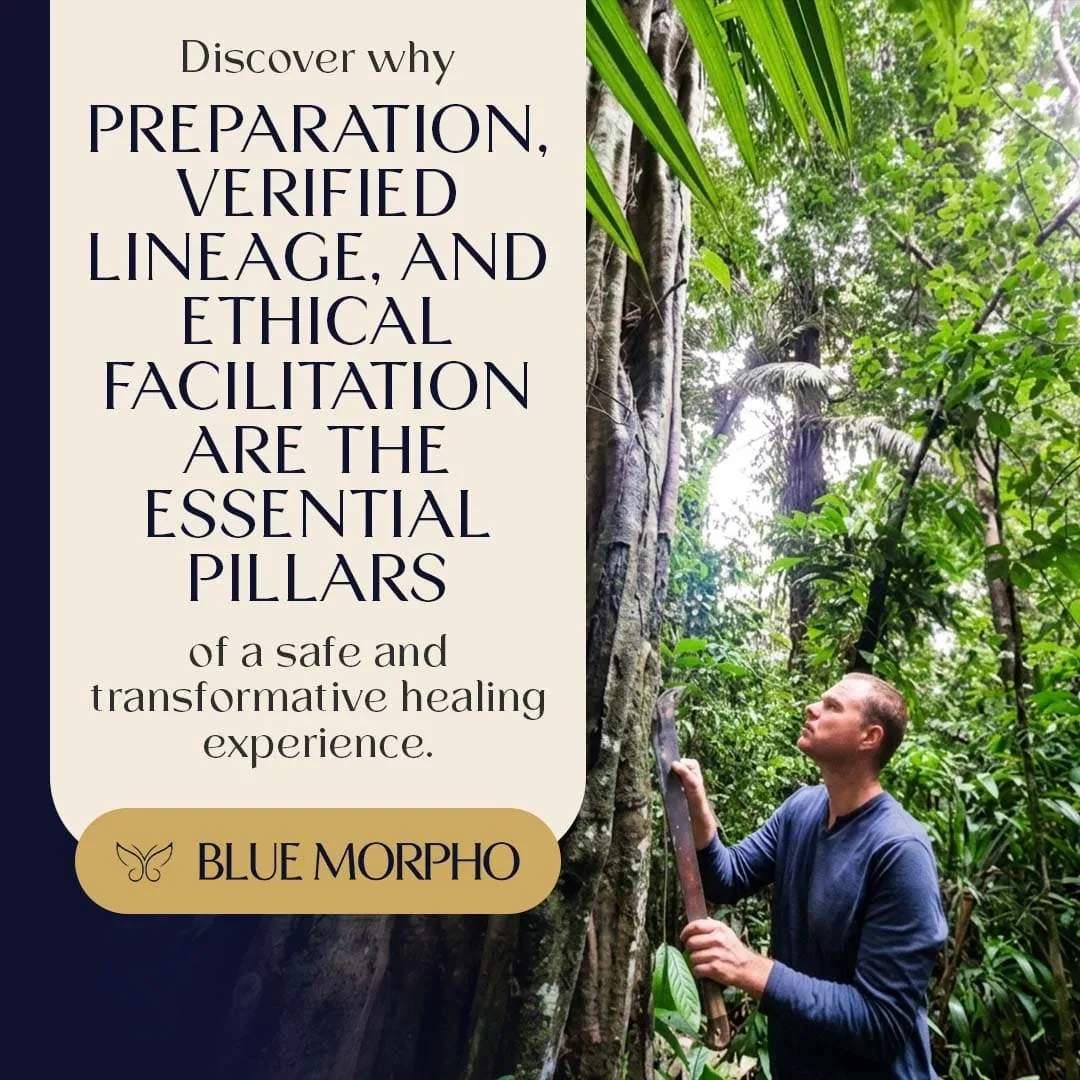
Maestro Hamilton Souther apprenticed in the deep Amazon under Don Julio Llerena Pinedo. He became the first Westerner ever recognized as a Maestro Medico Vegetalista. That title is not self-appointed. It was earned through years of traditional apprenticeship within an unbroken lineage.
Lineage-based practice means the methods, songs, plant diets, and ceremonial protocols come from a living tradition, not from a weekend training.
Blue Morpho, founded by Hamilton Souther in 2002, has now held over 3,000 plant medicine ceremonies. More than 15,000 people from over 100 countries have participated.
Safety as a System, Not a Promise
Many retreats say they prioritize safety. Few have built actual systems around it.
At the center, the safety framework includes several key elements:
- Thorough intake processes to screen for contraindications
- Experienced facilitator support throughout every ceremony
- Daily integration sessions with Maestro Hamilton
- Dedicated Q&A time so participants can process what arises
- Ongoing post-retreat community support through virtual mentorship
This is not a checklist. It is a container. Every element connects to the next.
Amy described the depth of what that care felt like for her personally:
“I feel liberated — from ancient traumas, abuses, mental and emotional anguish that have plagued my life from a young age, battling suicidal inclinations, questioning whether my life was even worth living. Decades of suffering has come to an end, and it is thanks to Maestro Hamilton and the Amazonian lineage he both embraced, and was embraced by.”
These are not small outcomes. They are the result of a process that takes safety seriously at every stage.
The Problem with Commercialized Retreats
The ayahuasca space has grown quickly, and commercial demand has outpaced the development of trained facilitators. Some centers operate with little to no formal training, no lineage connection, and minimal integration support.
The consequences can be serious. Psychological distress, inadequate guidance during difficult experiences, and lack of follow-up care are documented risks when the ceremonial container is poorly held.
Choosing a retreat with a verified lineage, transparent practices, and real integration support is not a luxury: it is a requirement for a safe experience.
Blue Morpho tours have operated since 2006, making it one of the first ayahuasca healing centers open to international guests. That track record matters. You can verify the history, read real testimonials, and see who is leading the work.
Sheldon Newmister, another participant, shared this directly:
“Best place to take Ayahuasca and San Pedro in Peru by far. No other retreat centers match the quality and care provided than at Blue Morpho. Highly recommend this place.”
What You Can Expect at Our Retreat
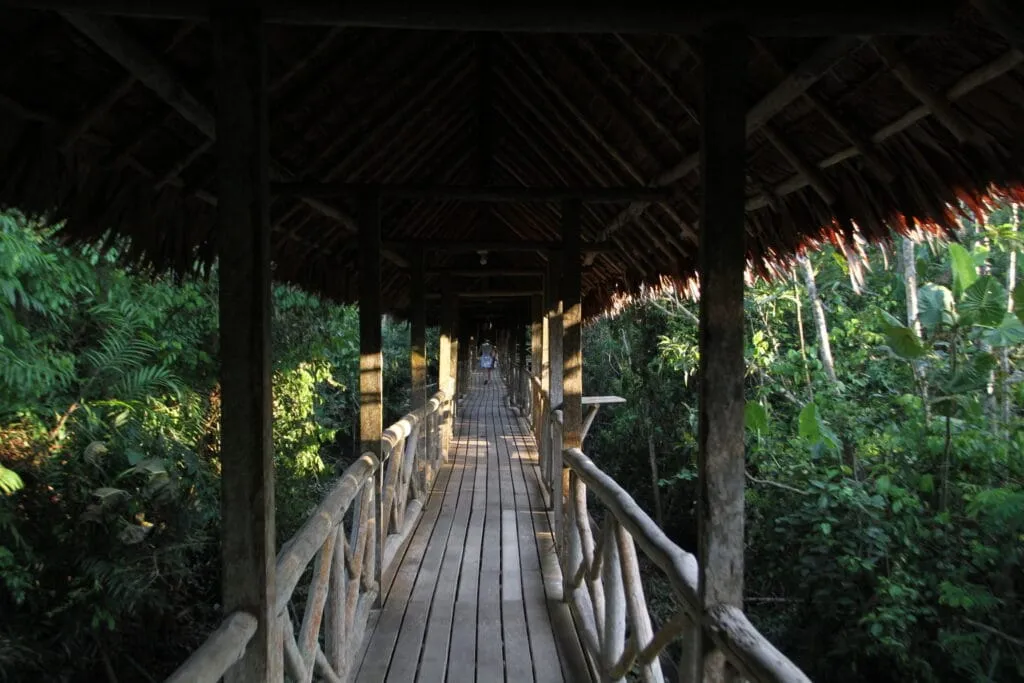
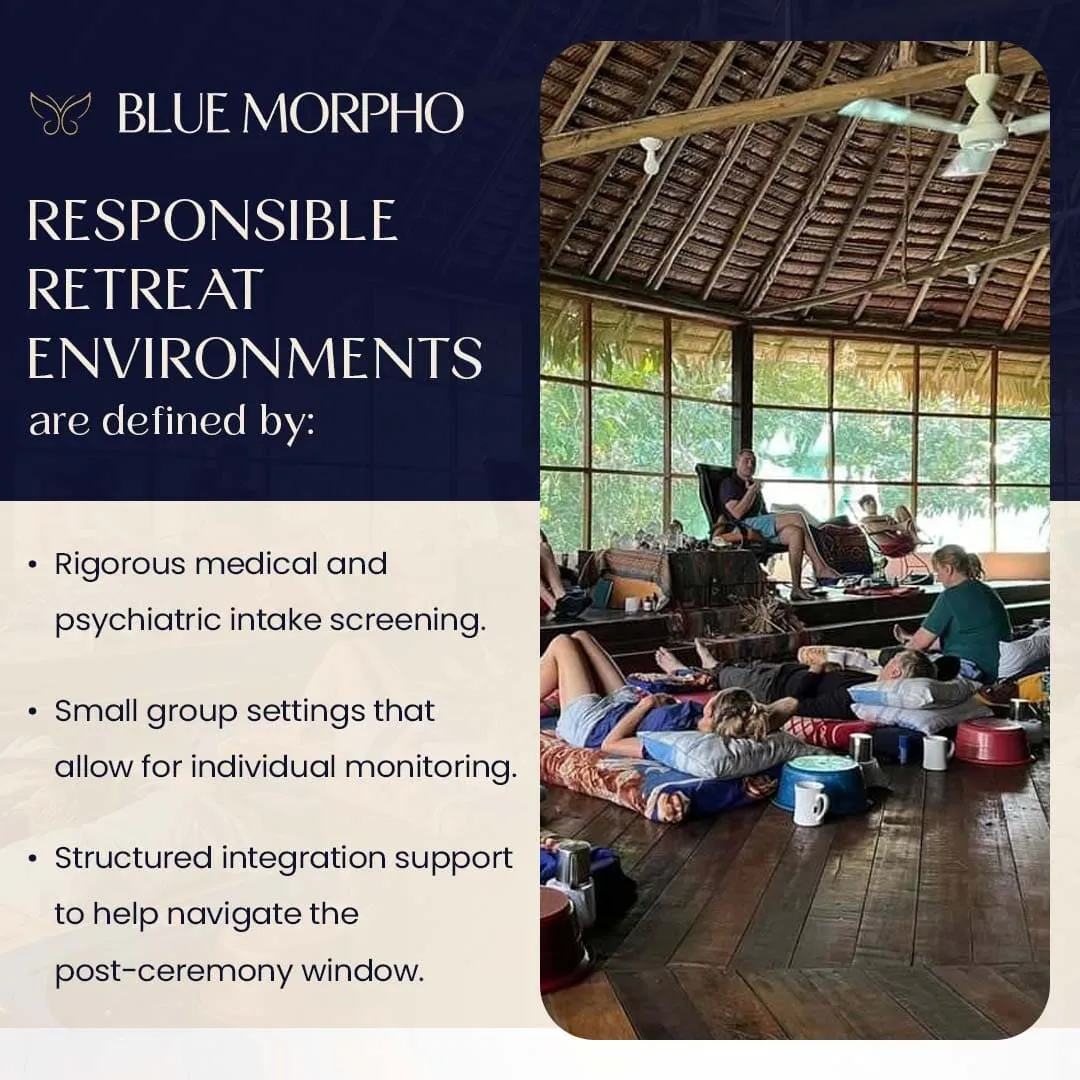
Blue Morpho’s ayahuasca retreats take place on a 170-acre private reserve nestled in pristine Amazonian rainforest near Iquitos, Peru. The lodge was purpose-built for ceremony work. It features a custom indoor and outdoor maloca, hand-built bungalows, a private swimming lake, and open-air jungle spaces that connect participants directly with the natural world.
Every aspect of the space was designed to support the inner work.
The ceremonial medicine is hand-crafted on site. Hospitality is seamless. Groups are carefully curated to preserve the intimacy that deep healing requires.
Beyond the physical setting, what defines our retreat is the presence and guidance of Maestro Hamilton himself. He leads each ceremony, offers daily integration, and remains available to answer questions. That level of personal involvement from the founding master is rare in this industry.
Ethics Built Into Every Touchpoint
Ethical retreat practice is not only about what happens inside the ceremony space. It includes how a retreat communicates, how it screens participants, how it supports people after they return home, and whether the organization continues to evolve its knowledge and protocols.
Blue Morpho tours have maintained that integrity across every one of these dimensions. The work is not static. Maestro Hamilton continues to develop the community through weekly virtual transmissions, online mentorship, live Q&A sessions, and a private community portal.
When Amy reflected on her journey, she named the full picture:
“His passion, dedication, sincerity of heart, extensive knowledge and experience, and clear mastery of his medicine work, is evident in every ceremony, in each teaching. Attending these Blue Morpho Retreats has been the absolute greatest gift I have ever given myself. Profound transformation, and deep gratitude to both Maestro Hamilton, and the whole team.”
That kind of continuity – ceremony, integration, community – is what real ethical practice looks like in action.
The Role of Training in Raising Industry Standards
One of the ways we extend our ethical commitment beyond retreats is through facilitator training. The education and training path offers three levels of structured learning:
- Level 1 Online Sitter/Coach Program: Foundations of safe ceremonial space-holding
- In-Person Initiation Retreat: Accelerated learning in Peru under Maestro Hamilton
- Level 2 Online Facilitator Program: Advanced training for those holding space for others
The curriculum covers preparation, ceremony facilitation, integration practices, safety protocols, and medicine-specific knowledge. It was designed by Maestro Hamilton using his extensive experience from over 20 years of direct practice.
Blue Morpho, founded by Hamilton Souther, was built on the premise that authentic healing requires authentic training. That philosophy now extends to the next generation of facilitators entering this field.
What to Ask Before Choosing an Ayahuasca Retreat
Choosing an ayahuasca retreat is a deeply personal decision, and it should never be based on marketing claims alone. The right questions can help you understand whether a retreat is grounded in lineage, safety, preparation, and long-term support. Below are key questions to consider before making that decision.
Q: How can I tell if a retreat center has a real lineage?
Ask who trained the lead facilitator, how long the apprenticeship lasted, and whether the practice comes from a recognized tradition. A true lineage is usually built through years of direct learning and ceremonial experience, not only through a short course or certificate.
Q: What should a safe retreat include beyond the ceremony?
A safe retreat should include intake screening, preparation support, trained facilitation during the ceremony, integration sessions, and post-retreat follow-up. Blue Morpho’s ayahuasca retreat includes these elements as part of its structure.
Q: Is ayahuasca legal in Peru?
Yes. Ayahuasca is legal in Peru and is recognized as part of the country’s national cultural heritage.
Q: What makes Blue Morpho different from other retreats?
Blue Morpho in Peru combines verified lineage, more than 20 years of ceremonial practice, a purpose-built 170-acre reserve, ongoing community support, and the leadership of Maestro Hamilton Souther. These factors give participants a clear record to review beyond general retreat claims.
Q: Can beginners attend the retreat?
Yes. First-time participants can attend. The intake process helps Maestro Hamilton and the team understand each participant’s background, intentions, and needs, while the group size is managed to support personal care.
Begin With Research, Then Choose With Care
If you are considering a plant medicine retreat, the most important thing you can do is research the people and the place behind the experience. Ask hard questions. Look for verified histories, real testimonials, and transparent protocols.
Blue Morpho in Peru offers all of that – and a 24-year track record to back it up. To learn more or to start your journey, reach out directly at [email protected] or visit our website.
The standard exists. You deserve to experience it.