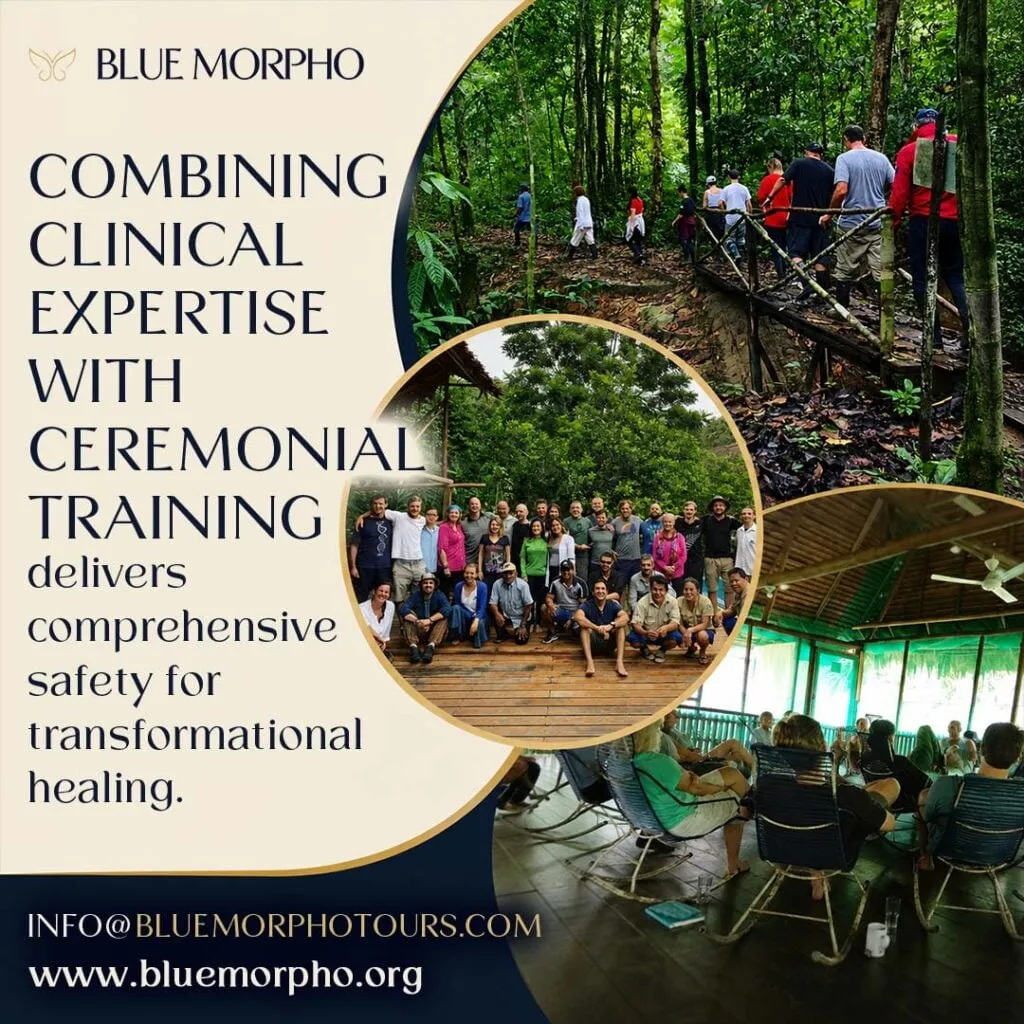
More mental health professionals are looking beyond conventional frameworks as the psychedelic renaissance reshapes conversations around healing. For therapists, counselors, and clinicians already working with trauma and emotional processes, plant medicine facilitator training adds a dimension clinical education alone doesn’t typically cover: direct experience with ceremonial space and container-holding.
What Does This Kind of Training Actually Add to Clinical Work?
Mental health professionals already understand emotional regulation, trauma response, and therapeutic processes from a clinical lens. Ayahuasca facilitator training builds on that foundation differently, through direct participation in ceremony, safety protocols specific to plant medicine work, and lineage-based practice rather than theory alone. As psychedelic training gains legitimacy across the wellness and mental health fields, this combination, clinical grounding plus ceremonial experience, is becoming more relevant for professionals exploring facilitation.
This interest isn’t happening in isolation. A 2024 systematic literature review in Cureus found growing research attention on ayahuasca’s potential therapeutic role in conditions such as depression and substance use, while noting that evidence in this area remains early-stage. For professionals considering facilitation, this growing research base is part of what’s drawing clinical interest into the field.
How Is Blue Morpho’s Training Path Structured?
A three-tier structure
Blue Morpho’s plant medicine facilitator training follows three stages, each building on the one before it.
Level 1: Sitter/Coach Program
An eight-week online course covering preparation, ceremonial facilitation basics, safety, and ethics, with bonus modules on Ayahuasca, San Pedro, psilocybin, and cannabis. Completing this level leads to a Blue Morpho Sitter/Coach Certification, which reflects training standards, not a clinical or medical license.
In-Person Initiation Retreat
Participants travel to Peru for a guided ceremonial retreat led by Maestro Hamilton, deepening the foundation built during Level 1 through direct, in-person practice.
Level 2: Facilitator Program
For those ready to hold more advanced ceremonial space, this stage builds on both prior levels, preparing participants for expanded facilitation responsibility.
What Makes Hamilton Souther’s Training Approach Different?
Hamilton Souther‘s own path shapes how Blue Morpho teaches. He apprenticed for years under Don Julio Llerena Pinedo in the Amazon before earning the title of Maestro in 2004, becoming the first Westerner recognized as a Maestro Medico Vegetalista. That apprenticeship model, direct mentorship over time rather than a short certification course, carries into our own curriculum.
For mental health professionals, this matters because facilitation draws on lived ceremonial judgment that’s difficult to teach through theory alone. Souther has personally led over 1,500 Ayahuasca ceremonies, a depth of firsthand experience reflected in the program’s safety and ethics components.
Where Does This Fit Alongside Licensed Clinical Practice?
Plant medicine facilitator training doesn’t replace clinical licensure, and it isn’t positioned as one. Instead, it adds a distinct skill set for professionals looking to expand how they support people through transformation. A few distinctions matter here:
- Blue Morpho’s certification is a training credential, not a board-recognized clinical accreditation.
- The Level 1 program is fully online, while the in-person initiation retreat requires travel to Peru.
- Professionals should also confirm how facilitation training fits within their own licensing body’s guidelines before applying it to client work.
How Does This Connect to the Broader Psychedelic Renaissance?
As interest in plant medicine facilitator training grows, more mental health professionals are asking how ceremonial practice and clinical work can coexist responsibly. Our approach treats facilitation as complementary to clinical training, grounded in decades of direct ceremonial experience rather than a fast-tracked credential. For professionals drawn to psychedelic training in Peru, specifically, that grounding in lineage and apprenticeship is part of what distinguishes the path.
Where to Begin
For mental health professionals exploring this path, understanding the relationship between facilitation training and clinical licensure is the first step. Blue Morpho‘s ayahuasca training program offers one option for professionals ready to deepen their practice through direct ceremonial experience. To learn more, reach out at [email protected] or visit our website.