How Did Hamilton Souther’s Background Shape His Worldview?
Souther studied cultural anthropology at the University of Colorado Boulder before traveling to the Amazon at 23. He apprenticed under Don Julio Llerena Pinedo and earned the title of Maestro in 2004. Blue Morpho, founded by Hamilton Souther between 2005 and 2008, began as a hand-built lodge in Peru that now serves as both the home of his ceremonial lineage and the base for his technology work. Over the following two decades, he led thousands of ceremonies and became the first Westerner recognized as a Maestro Medico Vegetalista. His work has since been featured in the New York Times, Time, National Geographic, The Washington Post, NPR, and Oprah Daily.
What Does Souther Actually Say About AI and Consciousness?
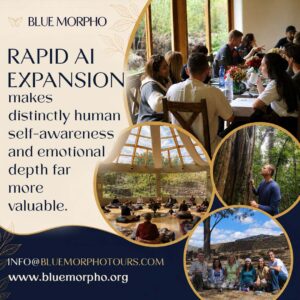
Souther describes his mission as helping humanity find a symbiotic harmony between life and technology, rather than treating the two as opposing forces. In a 2023 podcast interview, he suggested that AI will eventually touch nearly every part of daily life, whether people realize it or not, and that this shift makes distinctly human qualities, like self-awareness and emotional depth, more valuable rather than less.
How Does This Philosophy Show Up Outside of Blue Morpho?
Two ventures, one thread
Beyond Blue Morpho in Peru, Souther is the founder of Wondermint, described as an agent-to-agent exchange and marketplace, and co-founder of Headwaters, an AI lab focused on human flourishing. These are separate from our retreat and training work, but they share the same underlying premise: understanding what changes, and what stays human, as technology advances. Worth noting, these ventures are Souther’s personal projects and aren’t part of Blue Morpho tour’s offerings.
Why Does This Matter for People Considering Blue Morpho?
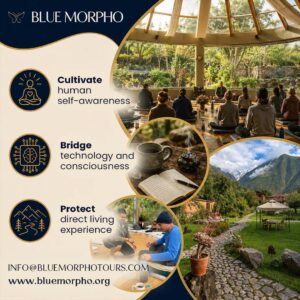
For most people looking into Blue Morpho’s Ayahuasca retreat, Souther’s technology ventures aren’t the reason they show up. But they explain part of his approach as a teacher. He treats direct human experience as something worth protecting deliberately, and that shows up in how Blue Morpho Retreats are structured, with an emphasis on in-person ceremony and ongoing community support rather than remote or automated formats.
What Does Research Say About the Value of Human-Led Experience?
- Statement: Researchers studying AI’s expansion into therapeutic and wellness spaces consistently flag the limits of automation in deeply personal contexts.
- Statistic: A 2024 review in the Annals of the New York Academy of Sciences found that integrating AI into psychedelic-related therapeutic work raises real questions about ethical safeguards and the continued need for human oversight (Sarris et al., 2024).
- Analysis: This lends outside support to Souther’s basic premise that human presence remains hard to replace in transformational work.
A Teacher Shaped by Two Worlds
Souther’s work in AI isn’t a departure from his path as a Maestro. It’s a natural continuation of it. Two decades spent guiding people through direct, unmediated experience gave him rare insight into what technology can never fully replicate. That insight is what he brings to every ceremony at Blue Morpho, and every conversation about where humanity goes next. To learn more about our retreats and training, reach out at [email protected] or visit our website.
]]>
Who Actually Attends Blue Morpho’s Retreats?
Blue Morpho’s Ayahuasca retreat draws a wide range of guests, but a recurring pattern among them is people in demanding, high-responsibility roles: executives, physicians, attorneys, and other professionals used to carrying pressure for a living. As Hamilton Souther has put it, “These are people who are interested in their own spiritual growth and development.” That description captures why so many high-performers choose to make the trip to Blue Morpho in Peru, not to escape their responsibilities, but to reconnect with something those responsibilities don’t leave room for.
This shift in who travels to the Amazon for ceremonies isn’t new. As far back as 2009, Gerald Mayeaux, a Houston-born restaurant owner based in Iquitos, was already observing the changing profile of visitors to the region firsthand. As he told TIME at the time, “these are doctors and lawyers. These are professional people.” Well over a decade later, that same pattern continues to hold at retreats like Blue Morpho.
What Does the Transformation Process Actually Look Like?
Structure behind the ceremony
Guests move through a preparation phase, several ceremonial nights guided by Maestro Hamilton, and a structured integration period. Our approach includes medical and psychological intake screening before arrival, then daily guidance and group reflection between ceremonies. For leaders used to control and structure in their work, this framework tends to matter. It signals the process is intentional, not improvised.
Why Does This Setting Matter for Deep Reflection?
The retreat takes place on a 170-acre private reserve near Iquitos, away from phones, calendars, and the routines that keep leaders in problem-solving mode. Removing that noise is often what allows space for the kind of reflection many guests say they couldn’t access at home.
What Does Research Say About Stepping Away From High-Pressure Roles?
- Statement: Researchers have measured how ayahuasca retreat participation affects reported mental health over time.
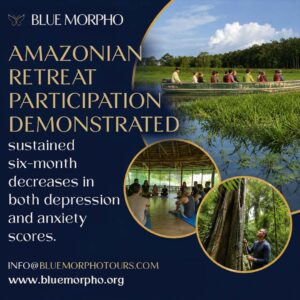
- Statistic: A naturalistic six-month study of 63 participants at an Amazonian retreat center found significant decreases in depression and anxiety scores following the retreat, with reductions sustained at the six-month follow-up (PMC, 2021).
- Analysis: This suggests the kind of full removal from routine, high-pressure environments that we offer can support meaningful, lasting shifts, not just short-term relief.
Frequently Asked Questions
Will my privacy be protected as a professional attending a retreat?
Yes. Blue Morpho maintains a curated, intimate group size and does not publicize guest identities, which many executives and professionals specifically value.
How do I integrate the experience once I’m back at work?
We provide daily integration support during the retreat, along with ongoing community access afterward, so the transition back to a demanding role isn’t abrupt.
Is this legal and safe for someone in a high-responsibility career?
Yes. Blue Morpho operates within Peru’s legal framework and uses medical and psychological intake screening before each retreat to assess individual readiness.
Ready to Take the Next Step?
Leadership often demands constant answers. Blue Morpho tours offer something different: space to sit with the questions. If you’re ready to explore what that could look like for you, reach out at [email protected] or visit our website to begin.
]]>
What Actually Happens During a Ceremony?
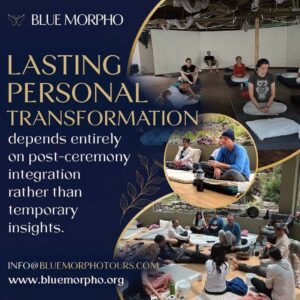
During ceremonies, whether Ayahuasca, San Pedro, or both, many people report shifts in perception, emotional release, or moments of clarity about their lives. These experiences can feel profound in the moment. But a single night of insight rarely rewires long-standing habits or patterns on its own.
Why Isn’t the Ceremony Enough by Itself?
The gap between insight and change
Insight is not the same as integration. Someone might leave an Ayahuasca or San Pedro retreat with a clear realization about a relationship, a career, or an old wound. Without deliberate follow-through, that realization can stay abstract. Integration is the bridge between what was seen in ceremony and what actually changes in daily life. At Blue Morpho, this bridge is treated as part of the retreat itself, not an afterthought.
What Does Research Say About Integration’s Role?
Researchers have looked closely at what actually separates a fleeting insight from real, lasting change after a psychedelic experience. A 2022 study in Frontiers in Psychology developed and validated tools for measuring psychedelic integration. These included behavioral engagement with reflection and applying insights from a psychedelic experience to daily life. The researchers emphasized integration as an ongoing process, one through which psychedelic experiences may translate into lasting changes in everyday life.
What Does Good Integration Actually Look Like?
Integration tends to include a few common elements, regardless of the specific retreat:
- Structured reflection or journaling in the days following the ceremony
- Ongoing support from facilitators or a peer community
- Gradual, intentional application of insights to daily routines
- Time set aside before returning to normal responsibilities
This is why Blue Morpho builds integration support directly into its retreat programs, rather than treating it as optional.
Does Location Affect the Integration Process?
Setting plays a role too. Ayahuasca in Iquitos, Peru, remains one of the most established settings for this work, in part because guests can ease out of the ceremony gradually within a natural, undisturbed environment, rather than returning immediately to daily pressures. This is part of why settings like Blue Morpho’s luxury ayahuasca retreat build in extra time for rest and reflection before guests travel home, with comfortable surroundings designed to support the process, not overshadow it.
As guest Todd Alexander put it, “You will always feel safe in your physical and spiritual space as well as comfortable in the amazing lodge located along the Amazon.”
Guest Melissa DeJoseph similarly described “If you are interested in working with the best and having a deep, potent experience in a beautiful setting with all your needs met effortlessly Blue Morpho is for you.”
Questions People Often Ask About Integration
How long does integration typically take?
There’s no fixed timeline. Many people continue integrating insights for months, and some describe it as an ongoing practice rather than a finite process.
Can integration happen without professional support?
Yes, though structured support, whether through a facilitator, community, or trusted guide, tends to make the process more consistent.
Is integration different after Ayahuasca versus San Pedro retreat experiences?
The core principles are similar, though the specific insights and pacing can differ based on the medicine and the individual.
Where the Real Work Begins
Plant medicine retreats can open a door. What walks through it depends largely on what happens next. For anyone considering an Ayahuasca or San Pedro retreat, the ceremony itself is only part of the story. To learn more about the retreats and integration support, reach out to us at [email protected] or visit our website.
]]>
What Happens Immediately After the Ceremony?
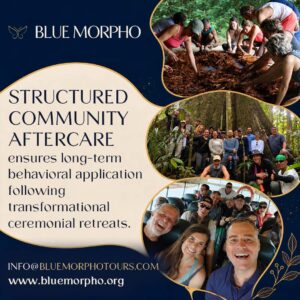
At our Amazon retreat center, integration begins before guests even leave. Each ceremonial night is followed by group reflection the next day, giving guests space to process what surfaced. This daily rhythm continues throughout the retreat, whether guests are attending an Ayahuasca and San Pedro retreat.
How Does Support Continue After Guests Leave?
Staying connected after the retreat
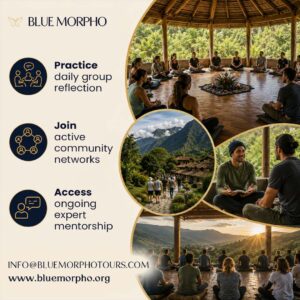
Once guests return home, our support doesn’t end. Guests can join a private Telegram group to stay connected with facilitators and fellow participants. Weekly online sessions, led by Maestro Hamilton, are open to community members and available for rewatch through an extensive archive of past ceremonies and talks. This ongoing structure gives guests continued access to guidance long after their Ayahuasca retreats conclude.
Research published in Frontiers in Psychology describes psychedelic integration as an ongoing process that can involve reflecting on an experience and applying insights from it to everyday life. The researchers also developed tools to measure integration-related behaviors and experiences, highlighting the importance of continued reflection and practical application following a psychedelic experience.
Why Does Blue Morpho Emphasize Community in Integration?
Processing a plant medicine experience alone can be difficult. Our community model gives guests a space to ask questions, share what they’re navigating, and hear how others have moved through similar insights. This peer support is often just as valuable as individual reflection, since integration tends to deepen through connection rather than isolation.
What Other Resources Does Blue Morpho Offer for Integration?
Guests exploring longer-term integration have additional options available:
- Access to an archive of past community sessions and ceremonies
- A discount on dieta programs for members continuing their practice
- Members-only offers and referral program access
- Ongoing mentorship through ongoing community engagement
For those drawn to a more immersive path, we also offer dieta, a traditional practice rooted in Amazonian lineage, as a way to deepen integration over an extended period.
Does Setting Still Matter After the Retreat Ends?
The 170-acre reserve where we operate plays a role during the retreat itself, allowing guests at our luxury ayahuasca retreat in Iquitos, Peru, to ease gradually out of the ceremony before returning home. That gradual transition, paired with structured community support afterward, is part of why many guests describe integration as something that continues well beyond their time in Peru.
What Guests Often Ask About Integration
Do I need to be an active community member to get integration support?
No. Daily integration is built into every retreat. The Telegram group and weekly sessions are optional for guests who want ongoing support afterward.
Is the community support only for people who attended an in-person retreat?
No. Our online community, including weekly sessions and the Telegram group, is open to anyone interested in this work, regardless of whether they’ve attended a retreat.
What if I want more structured, long-term integration work?
Our dieta programs offer a deeper, extended path for guests looking to continue their practice beyond a single retreat.
Integration as an Ongoing Relationship
For Blue Morpho, integration isn’t a single conversation after the ceremony. It’s an ongoing relationship that continues through community, mentorship, and shared practice. To learn more about plant medicine retreats and integration support, reach out to us at [email protected] or visit our website.
]]>
What Does This Kind of Training Actually Add to Clinical Work?
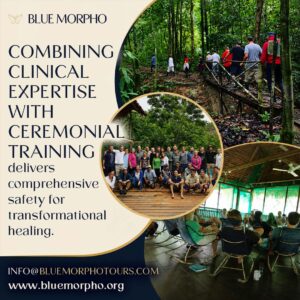
Mental health professionals already understand emotional regulation, trauma response, and therapeutic processes from a clinical lens. Ayahuasca facilitator training builds on that foundation differently, through direct participation in ceremony, safety protocols specific to plant medicine work, and lineage-based practice rather than theory alone. As psychedelic training gains legitimacy across the wellness and mental health fields, this combination, clinical grounding plus ceremonial experience, is becoming more relevant for professionals exploring facilitation.
This interest isn’t happening in isolation. A 2024 systematic literature review in Cureus found growing research attention on ayahuasca’s potential therapeutic role in conditions such as depression and substance use, while noting that evidence in this area remains early-stage. For professionals considering facilitation, this growing research base is part of what’s drawing clinical interest into the field.
How Is Blue Morpho’s Training Path Structured?
A three-tier structure
Blue Morpho’s plant medicine facilitator training follows three stages, each building on the one before it.
Level 1: Sitter/Coach Program
An eight-week online course covering preparation, ceremonial facilitation basics, safety, and ethics, with bonus modules on Ayahuasca, San Pedro, psilocybin, and cannabis. Completing this level leads to a Blue Morpho Sitter/Coach Certification, which reflects training standards, not a clinical or medical license.
In-Person Initiation Retreat
Participants travel to Peru for a guided ceremonial retreat led by Maestro Hamilton, deepening the foundation built during Level 1 through direct, in-person practice.
Level 2: Facilitator Program
For those ready to hold more advanced ceremonial space, this stage builds on both prior levels, preparing participants for expanded facilitation responsibility.
What Makes Hamilton Souther’s Training Approach Different?
Hamilton Souther‘s own path shapes how Blue Morpho teaches. He apprenticed for years under Don Julio Llerena Pinedo in the Amazon before earning the title of Maestro in 2004, becoming the first Westerner recognized as a Maestro Medico Vegetalista. That apprenticeship model, direct mentorship over time rather than a short certification course, carries into our own curriculum.
For mental health professionals, this matters because facilitation draws on lived ceremonial judgment that’s difficult to teach through theory alone. Souther has personally led over 1,500 Ayahuasca ceremonies, a depth of firsthand experience reflected in the program’s safety and ethics components.
Where Does This Fit Alongside Licensed Clinical Practice?
Plant medicine facilitator training doesn’t replace clinical licensure, and it isn’t positioned as one. Instead, it adds a distinct skill set for professionals looking to expand how they support people through transformation. A few distinctions matter here:
- Blue Morpho’s certification is a training credential, not a board-recognized clinical accreditation.
- The Level 1 program is fully online, while the in-person initiation retreat requires travel to Peru.
- Professionals should also confirm how facilitation training fits within their own licensing body’s guidelines before applying it to client work.
How Does This Connect to the Broader Psychedelic Renaissance?
As interest in plant medicine facilitator training grows, more mental health professionals are asking how ceremonial practice and clinical work can coexist responsibly. Our approach treats facilitation as complementary to clinical training, grounded in decades of direct ceremonial experience rather than a fast-tracked credential. For professionals drawn to psychedelic training in Peru, specifically, that grounding in lineage and apprenticeship is part of what distinguishes the path.
Where to Begin
For mental health professionals exploring this path, understanding the relationship between facilitation training and clinical licensure is the first step. Blue Morpho‘s ayahuasca training program offers one option for professionals ready to deepen their practice through direct ceremonial experience. To learn more, reach out at [email protected] or visit our website.
]]>
What Does “Conscious Leadership” Actually Mean Here?
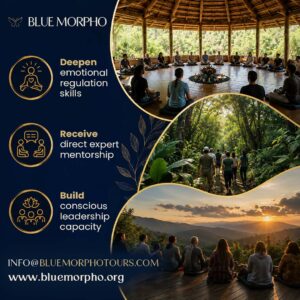
We don’t define conscious leadership as a management style. It’s framed as a capacity: self-awareness, emotional regulation, and clarity under pressure, built through direct experience rather than instruction. Ayahuasca facilitator training is one path toward that capacity, using ceremonial work as a tool for confronting patterns that conventional leadership training often doesn’t reach.
How Does the Training Path Build This Over Time?
Three stages, one throughline
Blue Morpho’s plant medicine facilitator training unfolds in stages. The Level 1 Sitter/Coach Program, an eight-week online course, builds foundational self-awareness alongside facilitation basics, safety, and ethics. Participants then travel to Peru for an in-person initiation retreat, deepening that foundation through direct ceremonial experience. Those ready for it continue into the Level 2 Facilitator Program, developing the capacity to hold space for others, a skill that mirrors what conscious leadership actually requires in practice.
Why Does Experienced, Responsible Guidance Matter?
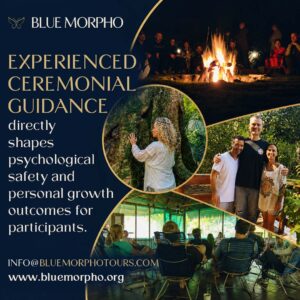
When ceremonial retreats are led by experienced, responsible shamans, the results guests describe often go beyond a single experience. Harvey Shoemaker, a Blue Morpho guest, said: “The knowledge that I have gained from this experience is indispensable.” Another guest, Ivan Kulintsev, has described Hamilton Souther as a spiritual mentor whose approach to ceremony and life has shaped his own commitment to living with greater intention.
This aligns with what researchers have found more broadly. A 2021 placebo-controlled study published in Psychopharmacology found that “set and setting,” including the quality of ceremonial guidance, meaningfully shaped participants’ psychological outcomes during ayahuasca retreats. Accounts like these reflect the same quality of guidance that carries into our training path, where participants learn directly from a Maestro with decades of ceremonial responsibility, not simply a curriculum written by others.
What Role Does Hamilton Souther’s Own Path Play?
Souther’s approach to teaching reflects his own training. He apprenticed for years under Don Julio Llerena Pinedo before earning the title of Maestro in 2004, becoming the first Westerner recognized as a Maestro Medico Vegetalista. That apprenticeship model, sustained mentorship over time, shapes how we structure our own psychedelic training in Peru. For participants, this means guidance from someone who has personally led over 1,500 Ayahuasca ceremonies, not simply someone teaching from a curriculum written by others.
How Does This Connect to the Wider Psychedelic Renaissance?
As the psychedelic renaissance continues to reshape how people think about growth and healing, more individuals, not only clinicians, are exploring facilitator-level training as a path to personal development. Our model treats leadership capacity as something built through direct ceremonial work and community, rather than isolated study.
What Prospective Participants Often Ask
Is this training only for people planning to become facilitators?
No. While the program leads to a facilitation certification, many participants pursue it primarily for personal growth and leadership development.
Does the training happen entirely in Peru?
No. Level 1 is online, while the in-person initiation retreat and further stages take place in Peru.
What distinguishes Blue Morpho’s approach from other leadership programs?
Its foundation is direct ceremonial experience and long-term mentorship, rather than classroom-based instruction alone.
A Different Kind of Leadership Development
Blue Morpho’s training path doesn’t promise leadership as a title. It builds it as a capacity, through ceremony, mentorship, and sustained practice. To learn more, reach out to us at [email protected] or visit our website.
]]>
Why Setting Is Part of the Medicine, Not Just the Backdrop
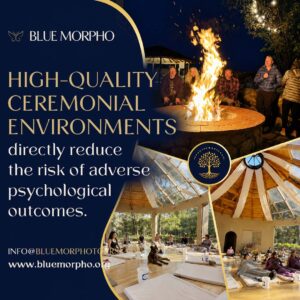
Ayahuasca ceremonies have always depended on more than the plant. A peer-reviewed study on ceremonial environments found that setting is a real moderator of outcomes. Higher-quality settings reduced the chance of a difficult experience and supported a more meaningful one (PMC, 2022). That single finding explains a lot about why Blue Morpho has operated from the same stretch of Peruvian Amazon for over two decades rather than relocating for convenience.
Iquitos itself has long been a center of this tradition, which is part of why Blue Morpho tours consistently return to this region rather than offering ceremonies elsewhere. The city sits deep in the rainforest, surrounded by many of the same medicinal plants and ecological conditions that have shaped Amazonian healing traditions for generations.
What “Setting” Actually Means in Practice
Setting isn’t abstract. It includes sound, light, isolation from modern distraction, and the presence of an experienced guide. At a jungle maloca, ceremonies happen under open sky, with natural sound replacing the noise of daily life. Based on Blue Morpho’s experience facilitating ceremonies, many participants appear to settle into the process more easily before the ceremony begins when immersed in the rainforest environment.
What Daily Life Looks Like on a Private Amazon Reserve
Blue Morpho’s Ayahuasca retreat operates on a 170-acre private reserve, built in 2006 as one of the earlier centers of its kind open to international guests. Guests stay in hand-built bungalows, with access to a private swimming lake and an open-air jungle shower beneath the forest canopy. This isn’t primitive camping. It’s a purpose-built space designed around the ceremony, not around tourism.
A common pitfall we’ve seen: guests assume “remote” means “unprepared.” In practice, remoteness requires more structure, not less, which is why intake and preparation matter as much as the ceremony itself.
Understanding Safety in a Remote Jungle Setting
Peru’s government formally recognized traditional ayahuasca use as national cultural patrimony in 2008, distinguishing protected ceremonial use from casual or commercial use (ICEERS). That legal context matters, but it doesn’t replace personal screening. Certain medications and health conditions carry real risks, which is why thorough intake conversations should happen well before travel.
Questions to Ask Before Choosing a Jungle-Based Retreat
- How does the center screen for medical contraindications?
- What is the emergency response plan for a remote location?
- Who is leading the ceremony, and what is their training background?
How the Rainforest Shapes the Ceremonial Experience Itself
Beyond safety, the rainforest itself supports the kind of introspection people are often seeking. Removing phones, traffic, and artificial light tends to slow people down before they even sit for ceremonies. This observation is broadly consistent with published research suggesting that environmental factors contribute to participants’ subjective experiences.
Jungle-Origin Settings vs. Other Locations
Ceremonies outside the Amazon may still follow respectful traditions, although they take place outside the ecological environment where ayahuasca originated and where many traditional practices developed. Andean cities host ceremonies too, though the plant itself grows in the lowland jungle, not the mountains. That distinction is worth understanding before booking Blue Morpho Retreats or any other Amazon-based program.
What You Should Know First
Q1: What should I do to prepare before attending a jungle-based retreat?
Complete any required medical screening, follow the recommended dietary guidelines, and arrive with realistic expectations about the jungle environment. Good preparation supports both your comfort and your retreat experience.
Q2: Can beginners handle the physical environment, including heat, insects, and isolation?
Most first-time guests adapt within a day or two. The lodge is designed for the jungle environment, and experienced staff are there to help newcomers settle in.
Q3: Do I need to travel to the Amazon for an authentic experience?
Not strictly, but the plant’s origin and traditional practice are rooted there, which many practitioners consider meaningful.
Choosing a Setting That Matches the Medicine
The Amazon is closely connected to the plant’s origin, the history of Indigenous ceremonial traditions, and research suggesting that environmental setting contributes to participants’ overall experiences. Anyone comparing retreat options should weigh setting as seriously as price or itinerary length.
To learn more about Blue Morpho’s retreats in the Peruvian Amazon, contact [email protected] or visit our website.
]]>
What the Clinical Trials Show About Ayahuasca and Depression
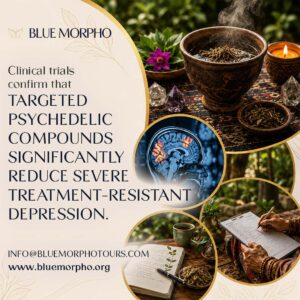
Ayahuasca has a stronger evidence base. A double-blind, randomized, placebo-controlled trial at a Brazilian university hospital tested ayahuasca in patients with treatment-resistant depression, people who hadn’t responded to at least two prior antidepressants. Those who received ayahuasca showed greater reductions in depression scores than the placebo group.
A Landmark Trial in Brazil
A 2026 Phase IIa trial from Imperial College London tested DMT, ayahuasca’s main psychoactive compound, in 34 people with depression. Those given DMT showed larger drops in depression severity than placebo, with effects lasting up to six months for some. A separate longitudinal study found similar patterns of sustained improvement over time (Frontiers in Psychiatry, 2026).
What Does the Evidence Say About San Pedro?
A 2026 systematic review screened 2,770 publications on mescaline, the primary psychoactive compound found in the San Pedro cactus, but found only 10 studies that met its inclusion criteria (MDPI, 2026). Those studies reported improvements in depression measures and substance use outcomes, although the overall body of evidence remains limited.
Why the Research Lags
Mescaline’s Schedule I status has limited formal study for decades. San Pedro has been used ceremonially for thousands of years, but longstanding traditional use is not the same as clinical evidence. Anyone considering an ayahuasca or San Pedro retreat should understand this difference in the available evidence before making a decision.
| Ayahuasca | San Pedro | |
| Study type | Randomized, placebo-controlled trials | Primarily observational and small studies |
| Studies of note | 2 major RCTs, 2026 Phase IIa trial | 10 studies met inclusion criteria from 2,770 publications screened |
| Reported findings | Reduced depression symptoms, with benefits lasting up to six months for some participants | Improvements in depression and substance use measures |
| Research stage | Growing clinical evidence | Early-stage research with limited clinical evidence |
Who Should Be Cautious
- Whether the facilitator screens for psychiatric history – not just physical health
- Whether any current medications could interact with ayahuasca or San Pedro
- Whether the retreat clearly explains the current evidence for each medicine
- Whether emergency medical protocols are in place
What the Research Can’t Fully Capture
Clinical trials happen in labs, not in a Maloca in the Amazon at night. In over 20 years of facilitating ceremonies in Iquitos, Peru, Maestro Hamilton Souther has observed patterns across thousands of participants that no single trial design captures: how setting, ritual, and multi-day integration shape a person’s experience alongside the medicine itself. That’s an observation, not a clinical claim. One thing we’ve learned directly: telling people upfront that San Pedro’s evidence is thin builds more trust than overstating what’s proven.
One Blue Morpho guest shared, “Hamilton is the real deal and has created a safe space in which to explore these sacred medicines… Aya is beyond explanation; if you’re called, let go of your fear and just go do it. Huachuma was very mellow, very “lovey”, and lasted most of the day.”
How to Evaluate a Retreat’s Claims
Whether you’re considering a luxury ayahuasca retreat or a simpler plant medicine retreat, ask which compound is being discussed, which condition is being studied, and what type of research supports the claim. A transparent retreat should explain both what current research supports and where evidence is still emerging.
Evidence and Experience, Read Together
Research on ayahuasca continues to grow, while research on San Pedro remains in an earlier stage. Science can explain part of the picture, while experienced facilitators provide practical context that clinical studies are not designed to measure. Together, they help people make more informed decisions.
If you’d like to learn more about Blue Morpho’s plant medicine retreats in Peru, including our approach to ceremony preparation, integration, and participant education, visit our website or email [email protected].
]]>
Two Decades of Direct Facilitation Experience
Blue Morpho was founded by Hamilton Souther, who has spent more than two decades facilitating ayahuasca ceremonies and studying within Amazonian healing traditions in Peru. In this field, formal licensing doesn’t exist the way it does in medicine. Lineage, mentorship, and years of direct ceremony experience are what actually separate a skilled facilitator from someone improvising. Those principles have guided Blue Morpho in Peru since its founding.
A Structured Approach, Not Just a Vibe
What Makes the Difference in the Room
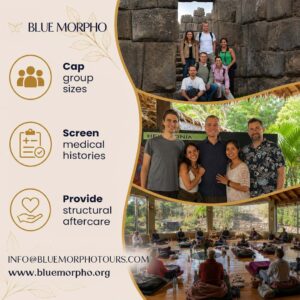
Plenty of operators can hand you a cup of ayahuasca. Experienced retreat centers should be able to explain how participant screening, group size, and facilitator support contribute to safety throughout the ceremony. In our years running Blue Morpho tours, one lesson has repeated itself: groups larger than a dozen participants dilute the individual attention a difficult ceremony night actually requires, which is why we cap group size rather than maximize bookings.
Common pitfall to avoid: arriving without having discussed current medications with a doctor first. Ayahuasca acts as a natural MAOI, and certain antidepressants or cardiovascular conditions carry real interaction risk (NIH/PMC). Tapering off some medications takes weeks, not days; leaving this to the last minute is the single most avoidable mistake we see.
Why Legal Ground Matters, But Isn’t the Whole Story
Peru made a specific reservation to the 1971 UN Convention on Psychotropic Substances exempting ayahuasca, and in 2008 formally recognized it as national cultural heritage (ICEERS). That legal protection is real, but it protects the practice, not the quality of any individual retreat, which is exactly why facilitator experience and screening matter more than a legal disclaimer ever could.
The Experience Doesn’t End When the Retreat Does
What often makes a retreat feel transformative rather than just intense is what happens afterward. ICEERS highlights post-ceremony integration as a key part of responsible ayahuasca practice because many participants need time and guidance to process their experiences once they return home. At Blue Morpho, we follow the same philosophy by supporting guests both during and after their retreat through:
- Integration sessions during the retreat to help participants reflect on and process their experiences.
- Free online integration calls after returning home, offering continued guidance and discussion.
- Ongoing mentorship and community support to help participants incorporate their insights into everyday life.
Our approach is based on the belief that the ceremonies are only one part of the journey. Lasting transformation comes from having the guidance and support to turn those insights into meaningful, sustainable change.
Why This Matters More As the Industry Grows
The ayahuasca tourism industry around Iquitos has expanded quickly enough that quality varies enormously between operators.
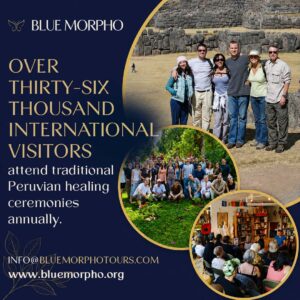
According to ICEERS’ 2019 industry survey, Peru had approximately 173 ayahuasca retreat centers serving more than 36,000 international visitors annually and facilitating an estimated 160,000 ceremonies each year.
At that scale, what makes an experience genuinely once-in-a-lifetime, rather than simply intense or risky, comes down to facilitator depth, real screening, and honest aftercare, not marketing.
What Truly Defines a Once-in-a-Lifetime Retreat
A once-in-a-lifetime ayahuasca experience isn’t defined by the ceremony alone. It’s the years of facilitation behind it, the structure that keeps a difficult night safe, and the support that carries you through what comes after. Those are the standards Blue Morpho retreat aims to uphold, and they are useful considerations when evaluating any retreat, regardless of the provider.
If you’d like to learn more about Blue Morpho’s approach or have questions about an upcoming retreat, visit our website or email [email protected].
Disclaimer: This article is intended for educational purposes and is not a substitute for professional medical advice. Always consult a qualified healthcare professional regarding medications or health conditions before participating in an ayahuasca retreat.
]]>
Why Does Immersion Matter More Than an Hour a Week
Therapy works in increments: fifty minutes, then a week of ordinary life before the next session. A retreat compresses that timeline. Days are spent entirely on preparation, ceremony, rest, and reflection, with nothing else competing for attention.
Time Away From Daily Life
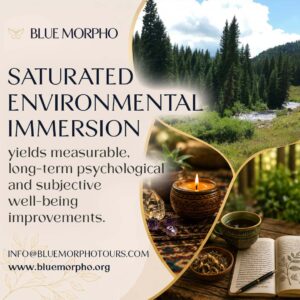
Removing someone from email, family roles, and daily obligations isn’t incidental. A large international survey of over 10,000 ayahuasca drinkers found that ceremony and setting characteristics were significantly associated with mental health and wellbeing outcomes. Research suggests that ceremonial setting may influence participants’ experiences and reported outcomes, although the specific contribution of the environment continues to be studied.
How Is Group Ceremony Different From One-on-One Therapy
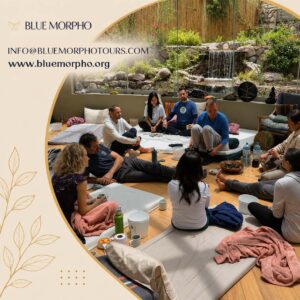
Individual therapy is, by design, one person and one therapist. Ceremonial retreats are usually held in a group, with participants moving through the same ritual structure together. Facilitators trained in this tradition also build in specific preparation and integration practices before and after the ceremony, drawn from what experienced ceremony leaders report actually helps (Callon, Williams & Lafrance, 2021).
Why Preparation and Integration Matter
At Blue Morpho, preparation starts before a guest ever drinks, and integration continues after they leave. One thing we’ve learned over 20+ years of facilitation: a ceremony without deliberate integration afterward is where people most often lose the benefit of the work. That follow-through is the part easiest to skip and most important to keep.
What Ongoing Integration Looks Like
For Blue Morpho guests, that continuity includes weekly virtual community sessions, a private group for questions and connection, and access to an archive of past ceremonies and talks, so integration doesn’t stop when the retreat ends.
A naturalistic six-month study of participants at a retreat center in the Peruvian Amazon recorded a statistically significant drop in depression scores from before to after the retreat. This wasn’t a placebo-controlled trial, so it can’t be read as equivalent to a clinical study. But it does show a measurable pattern in the retreat setting specifically, not just in a lab.
What a Psychedelic Retreat Isn’t
A psychedelic retreat is not a replacement for ongoing psychiatric or medical care, and it isn’t the right fit for everyone. Before choosing between a retreat and continued therapy, or combining both, it’s worth asking:
- Does the facilitator screen for psychiatric history, not just physical health?
- Is there a clear plan for integration after you go home?
- Does the retreat disclose what it can’t guarantee?
- Is ongoing support available beyond the ceremony days themselves?
Where the Setting Itself Becomes Part of the Work
Plant medicine retreats vary widely, from basic accommodations to a luxury ayahuasca retreat with private lodging and daily hospitality. Blue Morpho’s retreats sit inside a 170-acre private reserve near Iquitos, Peru, and include a few specific features guests won’t find in a therapist’s office:
- A custom indoor and outdoor maloca built for a ceremony under the open sky
- A private swimming lake and pool on the property
- Hand-built bungalows rather than shared clinical space
- An open-air jungle shower and forest meditation spaces as part of the daily rhythm
None of these details are clinical findings; they’re descriptions of the actual setting, included because the setting itself has been linked to outcomes in ceremonial contexts.
What Else Should You Know About Plant Medicine Retreats
- Can I combine therapy with a plant medicine retreat?
Yes, in some cases. A plant medicine retreat can complement, but not replace, ongoing therapy or medical care. - Why is integration considered as important as the ceremony?
Integration helps translate insights from the retreat into meaningful, lasting changes in daily life. - How can I tell if a plant medicine retreat is reputable?
Choose a retreat that prioritizes participant screening, preparation, integration, emergency protocols, and transparency about the current evidence.
Curious What This Looks Like in Practice
An ayahuasca or San Pedro retreat offers structure that a therapist’s office wasn’t built for: immersion, group ceremony, and setting working together. Whether that fits your situation is worth thinking through carefully. If you’re curious how ancient plant medicine and modern research meet in the Amazon, visit us online or email [email protected] to learn more.
]]>